Showing posts with label thinking. Show all posts

Saturday, 4 March 2017

A Different Taste of Sweden

Pic of full screen shot of yellow cross on blue background of Swedish flag


The University of Westminster staged its first Difference Festival this week. Andrew Linn, the Pro Vice-Chancellor and Dean of Social Sciences and Humanities, described it as a 'Festival of the Mind'. The various talks celebrated difference in one way or another.
I attended the 'Discover Swedish Language and Culture' talk. Christina Nilsson promised to demonstrate that there is much more to Swedish culture than ABBA, IKEA and pickled herring.

The presentation began with a flurry of pictures and figures, as Christina set about keeping her promise to reveal Swedish society, mentality, language, food and music.

Country and Population Facts
Pic of Northern Europe with red pin in long. thin country of Sweden
Sweden's place in Europe
Sweden has 10 million inhabitants in the 5th largest country in Europe (in terms of land area).
85% of Swedes live in cities.
The capital is Stockholm. 2nd city Göteborg and 3rd city Malmö.

Less than 3% of the land is built upon. 
Sweden is long and thin: 1,574km long to be precise.
69% of the country is forest. 
15-17% were born in another country.

Other Residents
More than 300,000 elks
200,000 reindeer


Elk on hillside with forest background

Stockholm and its islands
Water, water, everywhere.
Stockholm is built on 14 islands.
It has 57 bridges.
The Stockholm archipelago consists of 30,000 small islands.


Pic of Stockholm from above surrounded by water
Stockholm surrounded by water

Swedish Culture
Murders? With exported TV series such as Wallander, Beck and Girl with a Dragon Tattoo... it might appear that Swedes are a murderous bunch. 


Sweden: multiple crime scenes - fact or fiction?

Why are such crime dramas so popular? The long, long, dark nights...
Nordic Noir authors wanted to point out what is wrong with Swedish society. 

Food
Fika - essential coffee and cake as often as possible. Whether meeting a friend or  at work, both in the morning and the afternoon, Fika is not to be missed.


Pic of a Swedish bun and coffee in cup on table top
Fika: coffee and a bun

Music
Swedes are proud of their music. Christina ran through a host of musicians to prove that Sweden has more than ABBA to offer.
3rd largest exporter of music.

The Eurovision Song Contest is a really big deal in Sweden. The selection process goes on for weeks with elimination rounds and second chances on the way to the final. The whole country watches on TV. Swedes take Eurovision seriously. Well-known stars take part. Only Ireland has won more Eurovision contests than Sweden.


Swedish Inventions
Swedes have shared an impressive range of inventions with the world.
Examples include the dialysis machine, pacemaker, zip, ombudsman, 3-point seat belt, Tetra Pack, Minecraft, Spotify, Candy Crush, Skype, safety match, etc.

pic of double-headed zip on bag running diagonally on screen
The zip: a Swedish invention

Swedish Society
Swedes rely on the State to provide for them - childcare, maternity pay and pensions.
They are happy to pay high taxes.
They expect the State to look after them when they need help.
The State Pension is set at 80% of your salary.
Childcare costs just £100 per month. Sweden has the highest proportion of working mothers as a result.

Law of Jante
Swedes expect an egalitarian society. The Law of Jante can help you to understand Swedish mentality:

1.  You're not to think you are anything special.
2.  You're not to think you are as good as we are.
3.  You're not to think you are smarter than we are.
4.  You're not to convince yourself that you are better than we are.
5.  You're not to think you know more than we do.
6.  You're not to think you are more important than we are.
7.  You're not to think you are good at anything.
8.  You're not to laugh at us.
9.  You're not to think anyone cares about you.
10. You're not to think you can teach us anything.

These 'rules' can also have a negative side. You should not boast about personal achievements. There are strong expectations of how to behave and dress. You should think of people as a group and contribute as a group. Young Swedes are trying to break out of this mentality today. 

Swedish Cultural Behaviour
Swedes have a reputation for being cool and standoffish. The Spanish even had an idiom based on them: hacerse el sueco - to behave like a Swede. They will not speak or say hello on a bus for instance. They ignore everyone.

Their straight-talking can appear rude. There is no word for 'please' in Swedish.
It is not unusual to be quiet for long periods over dinner. 

Apparent 'rudeness' should perhaps be interpreted as the sign of a nation that values its privacy. Some speculated that this was influenced by the climate. The winter cold prevents you from 'hanging about' to chat. Neighbours may not live that close to one another.

A New In-word?
The craze for Danish hygge is old hat. This year's in-word is lagom according to the Media. It is another of those untranslatable words. It means 'just about right. Not too much, not too little'.  The trouble is any one person's too much or too little is different. The word has its origin in sharing mead and ensuring that everyone got the same amount.

Love of Nature
Swedes love nature. They love to spend the long summer days out of the office walking in the woods, etc. 
Hiker in midnight sun in Sweden
Allemansrätten or 'right of public access' is very important in Sweden. It gives everyone the right to access the Swedish countryside.

Many Swedes have summerhouses in which they like to stay at weekends. Often these summerhouses are not that far from their main homes. It is also common to own a boat.

pic of red Swedish summerhouse at waterside surrounded by boats and yachts

Midsummer celebrations are as big as Christmas in Sweden. Swedes still celebrate Pagan festivals.


Pic of 2 girls with flowers in their hair for Midsummer Celebration on sunny day
Swedish Midsummer Celebration

Swedish Language
Christina explained that Swedish is very similar to Danish and Norwegian. It is more similar to English than we might expect. Danish is viewed as the more difficult language. 
A list of similar looking and sounding words appear on screen followed by a host of false friends. The word gift caused some laughter - it means both married and poison.

The evening ended with an invitation to sample further cultural differences and languages. In addition to Swedish, the University of Westminster also offers language courses in Arabic, Bulgarian, Cantonese, Chinese, Croatian & Serbian, Danish, Dutch, Farsi, Finnish, French, German, Hungarian, Italian, Japanese, Norwegian, European Portuguese, Romanian, Russian, Spanish, Swedish and Turkish.

Further information about Sweden can be found on the official website for Sweden. The Swedish Institute offer more information on 'Swedishness'. Podcasts are a popular form of communication in Sweden.

Karen Andrews is a freelance French to English translator, transcreator, content writer and editor. She has a strong background in global marketing.

Email Karen for further information via karenanglicityen@gmail.com in French, German or English.


Wednesday, 25 January 2017

French v. British Cultural Debate

Pic of French and British flags flying at top of flagpoles in opposite directions

The French Chamber of Great Britain's 5th cross-cultural debate took place at the French Ambassador's Residence in London in December 2016. The debate was sponsored by Airbus. It was both constructive and rich in content. The two speakers and the chair all have in depth knowledge of both French and British cultures.

Thinking differently
The debate quickly exposed different ways of thinking and reasoning between France and Britain. The French are more inclined towards abstract thinking; whereas the British are more interested practice than theory. The priority is that it must work for the British.


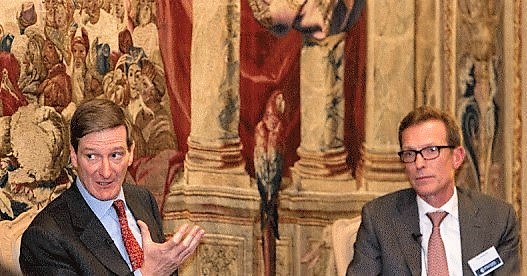
Pic of the two speakers during the debate
Dominic Grieve (left) and Yann Bonduelle (right) during the debate

Top-down French thinking is often misunderstood in Britain. The French need a philosophical 'framework' in which to work. The British like a more pragmatic approach; the French want everything well-defined within boundaries before moving ahead. The British don't even have a written Constitution, relying instead on precedents in Law. The French approach can end up with the perfect solution to a problem that has moved on in the meantime. Pros and cons emerged from both nations' approaches.

British politics is adversarial. French politics is conducted behind the scenes more. Ideas have value. The British do not like a public discussion of ideas. It is not regarded as a compliment to be considered an 'intellectual' in Britain.

Hybrid cultural approach
A hybrid approach was recommended when working with cross-cultural teams. The British like executive summaries. The French like to receive lots of information to consider first. The best approach is to give the British the 3 bullet points that they want first and move onto the framework required by other nationalities. Then have the debate.

Cultural debate evening at the French Ambassador's Residence

Education systems
The roots of the different French and British approaches trace back to our respective education systems. The French approach is to examine a concept to find its flaws. If it proves valid, it will be adopted. The British attitude is more inclined to 'get on with it'. The result can be that the British don't think through the consequences in 4-5 years' time. The British approach can therefore appear amateurish to the Germans and French.

The British education system has the upper hand when it comes to positive encouragement. It leads to a greater inclination to risk-taking in later life. The French system encourages pupils to conform. This makes it easier for French schools to rank pupils; whereas in Britain there is greater encouragement to find your 'sweet spot' and bolster self-confidence. A French lycée is competitive and critical with more negative reinforcement. The British system is seen as better at encouraging team-working from a young age.

Public v. State Education
The discussion moved on to discuss the differences between public and state education in Britain, as well as the perceived advantages of a very structured curriculum. Secondary schools in Britain may leave pupils with huge areas of 'ignorance' by contrast with the French system. It was felt that the French elite were well-educated.

Education v. Experience
Silicon Valley with its encouragement of out-of-the-box thinking and risk appetite received much admiration. This lead on to a discussion on preferences for experience over education in the UK and US. The French and Germans rank education more highly than experience. 

Education is not so essential for career progress in Britain and the UK. It is possible to find a 'side entrance'. Education becomes irrelevant once you have the experience. PwC abandoned the UCAS points system in its recruitment policy, as it was a huge predictor of social class. PwC now attracts a more diverse range of job applicants who are progressing very well and beyond expectations.


4 young people - 2 men, 2 women from different cultural backgrounds


Handling disagreement
The debate moved on to discuss direct and indirect approaches to disagreements. An indirect British approach can appear hypocritical. Courteous disagreement is a skill taught in British public schools. The intention is to have reasoned disagreements without offending. The British have developed a wider vocabulary to handle such subtle nuances.

In the South East of England, there can be a reluctance to face a disagreement. Some people may even say  'yes' to avoid a disagreement. Head further north in Britain and you will know more clearly where you stand. Here, a disagreement may even appear aggressive. Mediterranean cultures expose raw emotions in disagreements.

By contrast, academic French has a set vocabulary designed to impart complex ideas quickly without verbosity. You can't cut off a German speaker in mid-sentence or you may miss the word at the end of the sentence that conveys the real meaning.

Meeting styles
The most important person comes into the room last in a meeting in France. In British meetings, the focus is to put everyone at their ease for the discussions to follow. The French approach makes it clear who holds power in the room. No discussions will start until the Head arrives. In Britain, this strategy is disapproved of and can be high risk. Time equals money for Brits and they aren't inclined to wait.

Risk appetite
Silicon Valley has a huge appetite for risk and tolerance if a strategy does not work out. It was considered that there is still some stigma in the UK, especially in the Media. The French need 'more of the frying pan' - early pressure with the security of a safety net to improve their risk appetite.

The chair asked both men which quality they would export from each culture to create Utopia. Suggestions were French 'joie de vivre and 'bonhomie' and the UK's informality and 'unbelievable aptitude to make a deal'.

In conclusion, it was noted how learning about one language and culture opens the door to many other cultures. Cultural awareness is important even without language skills. We need to build bridges between cultures and between classes.

Pic of outstretched with loads of different miniature flags floating above theme
One language opens the door to many more cultures


The French Chamber's Cross-cultural quiz evening to be held at PwC's offices on 23 February 2017.


Pic of Yann Bonduelle speaking with his hands during the debate
Yann Bonduelle is a Partner and the UK Consulting Data Analytics Leader at PwC. His 150-strong UK team includes experts in Machine Learning, Natural Language Processing (NLP) and Artificial Intelligence (AI). He has a PhD from Stanford University in Engineering Economic Systems and an Electrical Engineering degree from INSA, Rennes, France.  The Frenchman’s international career with 8 years in California and 20 years in London. It makes him an ideal speaker to discuss working practices across cultures. 

Pic of Dominic Grieve MP
Dominic Grieve is the MP for Beaconsfield and a QC. He was the Attorney General for England and Wales and Advocate General for Northern Ireland from 2010-2014. He is  bilingual in French and English. He attended the French Lycée in London's South Kensington before studying history at Oxford University and Law in London. 

Pic of French Chamber's Senior Vice-President
Peter Alfandary, Senior Vice-President of the Chamber chaired the session (see first right). Peter is Head of Reed Smith’s French Business Group and has been involved in cross-cultural relations for over 30 years. 


Karen Andrews is a freelance French to English translator, transcreator, content writer and editor. She has a strong background in global marketing.

Email Karen for further information via karenanglicityen@gmail.com in French, German or English.

Photo credit:  Cross-cultural debate evening photos were taken by Joana Saramago. Other photo credits are noted in the properties tags for each photo.


Sunday, 6 September 2015

On Thinking in 3D

Picture of house in 3D wearing mortar board and shoes surrounded by question marks


In a momentous and heart-wrenching European news week, it was back to the usual school routine in our household. As explained in an earlier blog, school has never been my younger son's favourite place. I was delighted to see his smiley, confident return on Friday afternoon. What a difference a change in perspective can make.


James returned from school with a small drawing. A familiar scene in many homes no doubt. He showed me the drawing with pride. After explaining, he pinned it with a magnet to our fridge as so many times before in his primary school days.

The new Physics teacher had asked the class to draw a picture of a house. Then he awarded points for different characteristics in the drawings. James got high marks. Why? Because he drew a house in 3D, while many classmates drew conventional, 2-dimensional houses.

He regretted missing out on a few marks, because he didn't put the door off-centre. Good point. Doors, opportunities and solutions in life aren't generally to be found dead in the centre. Project plan and project experience often run slightly off course.

The house drawing also boasts lots of windows to look out of or to let in lots of light, depending on your perspective.

There is even a skylight to look up at the sky and stars.

Smokes rises from the chimney. This is a warm house with a fireside to huddle around in the cold depths of winter.

There is a large garden with a low fence. (Well, honestly, what would you expect from the son of a keen gardener?) The grass is depicted with meticulous strokes of green. Details matter.

That little drawing can stay on our fridge all year. I am very proud of my son. I am grateful to the inspirational Physics teacher who asked for something a little different. He showed James that his different perspective has value.

Our little family tale seems particularly relevant this week. We have seen ordinary people show warm, out-of-the box thinking towards refugees, in contrast to rigid, flat 2-dimensional thinking from wealthy, highly educated politicians.

People aren't numbers or quotas. Every individual has value.