Showing posts with label painting. Show all posts

Friday, 20 January 2017

Australian Impressionists: Glocalisation in art?


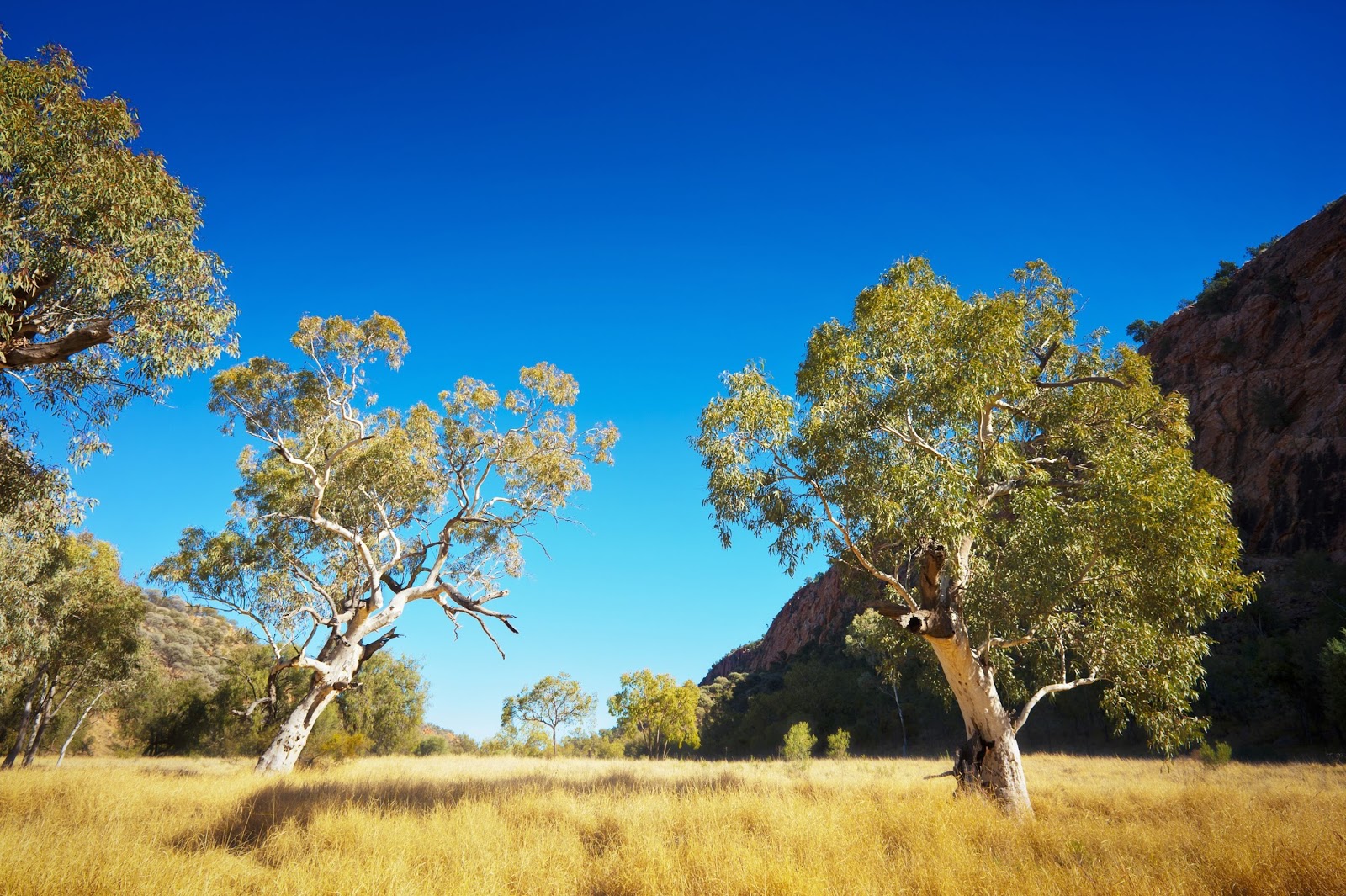
Pic of Australian Outback landscape with sparse trees and greenery

Snow was forecast in London. It was a good day to appreciate the light of the Australian Impressionists Exhibition inside the warm National Gallery. The exhibition features the work of Tom Roberts, Arthur Streeton, Charles Conder and John Russell.

9 by 5 Impressionism
I had no prior knowledge of Australian Impressionists. I greatly appreciated the audio guide and the 15-minute introductory film at the start. The audio guide explained the 9 by 5 Impression Exhibition of 1889. The artists painted on cigar box lids that were 9 by 5 inches. This artist-led exhibition created controversy. Critics were not impressed. Australians turned out in numbers to see what all the uproar was about for themselves.

Uniquely Australian
Arthur Streeton was undoubtedly the greater talent. His talent was already evident in his early twenties, before any French Impressionist or Whistler influence could have been possible. His work portrays recognisable Australian scenes as well as the unrelenting light.
Streeton’s Golden Summer had visited London before. It was shown at the Royal Academy in 1891. It won a Mention Honorable at the Paris Salon of 1892.


Pic of Blue Mountains view with mist and blue sky
Three Sisters in Blue Mountains, Australia c. dinozzazer

Another huge Streeton landscape appeared alongside: Fire’s On (1891). It depicts the building of a railway tunnel in the Blue Mountains. The audio guide explained the story of the dead man being carried on a stretcher after a rock fall from an explosion. It captures how hazardous life was in Australia at the turn of the century.

The Australian Impressionists captured Australian life and energy as the country came of age. There was also a depiction of a heroic Melbourne fireman’s funeral. Tom Roberts’ The Break Away depicted the scene of a getaway by contrary sheep. The guide explained how the square frame captured the energy of the scene. No single focus conveys the chaos and spontaneity. They took inspiration from European artists and developed their own uniquely Australian approach to their country’s landscapes. Aborgines are noticeable by their complete absence.

Russell
The third section of the exhibition shows the work of John Russell. He went to France as a young man. He worked with and was influenced by many great artists of the time – especially Monet and Van Gogh. He even mentored Matisse. He used an unnatural colour palette and painted French landscapes in an expressionist style. Among his collection were paintings of Antibes and Brittany.

This begs the question as to whether Russell was an Australian artist at all. Should he be considered French? It’s an intriguing question in an age of even greater mobility and international influences.

Glocalisation in art?
Since my visit I recalled the glocalisation presentation at the University of Westminster's Translation and the Creative Industries Conference of October 2016. I suppose that Australian Impressionism is an example of glocalisation in art. The Australian artists were influenced by the French Impressionists, but then found their own uniquely Australian way to adapt it to their own landscapes and culture. Could Russell's work be an example of non-native translation in art? Somehow his work doesn't have the same expressive quality as the French or Australian artists painting their respective homelands.

The truly Australian paintings are the ones that stand out in this exhibition. They capture a new nation finding and expressing its unique identity.


Karen Andrews is a freelance French to English translator, transcreator, content writer and editor. She has a strong background in global marketing.


Email Karen for further information via karenanglicityen@gmail.com in French, German or English.

Thursday, 12 January 2017

Virtual Reality as an Art Form


Pic of woman smilng and moving as she uses a virtual reality headset standing up


It’s a whole new world of artistic possibilities. A Friends’ Preview Evening at the Royal Academy of Arts introduced me to virtual reality as a new art form. Virtually Real displays 6 months of project work by 3 Royal Academy students using HTC Vive. 

HTC Headset and controls
Each participant at the preview had their own headset and HTC helper. The headset was a snug and comfortable. It remained firmly in place throughout the experience. I also had two handsets. They felt very much like Wii game controls. Swiping revealed additional virtual functionality.

First virtual artwork
It took some adjustment to understand that I could move 360 degrees around the first virtual world as well as forward, back, up and down. At one point, I felt obstructed by virtual black and white poles. At another point, the ground cut completely away from underneath me. My brain told me that I should be falling. I couldn’t see my feet on the floor. My reactions were in slow motion.

At the end of the first experience, I painted virtual reality objects as if daubing them with graffiti. They were suspended in the air. I moved to access different sides. My movements must have looked odd to anyone without a headset.

Virtual Martian world
The second experience of the evening was my favourite. I was transported into a Martian-type landscape. The sand was blowing in a wind at ground level, yet I could not feel the slightest breeze. The starry sky above made me stare up in wonder.

Orange barren type landscape and sky


I noticed some large blue insect-like creatures moving in a line in the mid-distance. It was like a scene out of Star Wars or Walking with Dinosaurs. Next, I became aware of 5 naked human forms dancing just in front of them. They did not interact with each other, or even show an awareness of each other. I was like a ghost within the scene - or sometimes within a visible blue cage-like structure.

I would have been quite happy just admiring the alien landscape. The changing night sky from day to night fascinated me. I also had music in my ears cutting me off from the real world. I watched as bone-like structures moved from the ground into the air and turned into singing mouths. An abstract painting come to life and sound.

Google Tilt Brush
The final experience involved having a go at virtual reality painting for myself using Google’s Tilt Brush. I felt like I was back in my primary school days wielding a large dollop of paint with an overly thick brush. My aerial artwork was little more than a squiggle. My scribble evolved into a multi-coloured logo. I tried to do an insect. My admiration for the RA’s student artists increased. I would need a lot longer than 6 months to reach even an amateurish level.

Pic of two primary school boys painting yellow sun, cars in red, clouds in blue on upright glass panel


Disorientation
The experience was soon over. The headset came off. I felt disorientated. My brain needed time to catch up. Others had apparently tripped and fallen afterwards. I suppose some people are more susceptible than others. I could see that these virtual worlds could become as addictive as online games - if not more so.

Future possibilities and responsibilties
This technological art is very much in its infancy. It felt immature at times. Inspiration seemed to come from gaming and science fiction films. No doubt both tools and artistry will become more refined, leading to greater control and detail in future. There is much more room for creativity. The experience could be more emotive. Paul Delaroche’s huge picture of Lady Jane Grey’s Execution in the National Gallery came to mind. That painting is moving in 2D; it could be overwhelming in virtual reality.

Amber flag. Virtual reality artists will need to explore the medium responsibly. They should steer clear of, or be ultra-careful with, gruesome or adult content. There is room for increased interactivity within the picture. It could be terrifying to find yourself inside a graphic horror scene.

Pic of man shocked by what he sees in virtual reality headset surrounded by painting


I would build on the experiences that inspired admiration and awe. Perhaps recreate the landscapes that we know are disappearing in the world? No doubt a great master or two will emerge and develop the new art form in ways we cannot even conceive of now. How would such artworks be handed down to posterity? How do we ensure that any masterpieces will still be accessible as technology develops?

Back in the Real World
I wandered through the other rooms. Some pieces had been printed in 3D. They seemed flat. I barely noticed the 2D paintings on the walls. Discounting waiting time, my experience lasted just under half an hour. Yet I was disorientated. It would be hard to see a whole gallery in virtual reality. Maybe we would become more acclimatised?


I was so distracted by my virtual world experiences that I missed my stop for home in the real world.


Karen Andrews is a freelance French to English translator, transcreator, content writer and editor. She has a strong background in global marketing.

Email Karen for further information via karenanglicityen@gmail.com in French, German or English.

Tuesday, 7 June 2016

Painting Naturally

Pic of print roller in hand painting green lawn with daisies on wall

Dutch Flowers followed by My Back to Nature. Two National Gallery exhibitions in one day; two entirely different approaches. Both had Nature as the subject. Both inspired reflections on the ‘arts’ of translation and copywriting. A difference in artistic perspective?

Art v Text
If I were to pick up a paint brush, I wouldn’t choose to follow either exhibition’s style. Artists are lucky. No-one is likely to come along and decide that they have got that bit wrong and should redo it. (Unless you are my fellow Bristolian Banksy and positively invite it). 

An unfortunate drip of paint may be incorporated into a painting. The viewer simply assumes the ‘slip’ was part of the artist’s intention.

Artist's paintbrush about drip red paint


You can admire elements of someone else’s style or approach without feeling the need to intervene. Unfortunately, that isn’t always the case with translations and copywriting.

No-one would dare to smudge out a few bits of a painting, having just progressed beyond painting by numbers.

If you are a translator or copywriter, you may well be subjected to a reviser’s Michelangelo flourish in the middle of your Pop Art.

Claims of artistic licence and originality will not wash. The reviser will not see the creativity for the textual equivalent of a drip of paint.


The two exhibitions at the National Gallery, Trafalgar Square, London, UK:

Exhibition runs until 29 August 2016
Free admission


Exhibition runs until 30 October 2016
Free admission