Showing posts with label French Chamber of Great Britain. Show all posts

Saturday, 16 December 2017

2017 Top 10 Blog Posts

Pic of Top 10 in red with centre of 10 hit by blue-feathered arrow


As the end of 2017 is fast approaching, let’s recap on the year’s most popular blogs as we did in 2015 and 2016. 

2017 has proved a quieter year for blogging - especially when compared with my exceptionally busy year of 2016. The year's writing still resulted in some very popular blogs with readers judging by my analytics. Event blogs remained popular. They were beaten by a number of other blog subjects this year. The early year blogs were the most popular. The cultural blogs of 2016 seemed somewhat dampened by Brexit.

I have remarked on a number of occasions that clients are not interested in translation. I therefore try to engage them via cultural aspects or by illustrating important considerations using another subject - e.g. boat industry safety, ice skating, art, etc. As a number of these blogs appear in the top 10 below, I consider that this strategy is working. Blogs raise a freelancer's profile and go on working for you when you are busy. Old blogs are revisited frequently. That was certainly the case for this year's No. 1.


Top Blogs

1. French v. British Cultural Debate
Summary of a French Chamber of Great Britain debate that took place at the French Ambassador's Residence in London. It centred on the differences between French and British business approaches and education. 

Every time Brexit discussions became tricky, the visits to this blog seemed to increase. Analytics reveal around 3,500 views - not bad for a freelancer's blog.
Post from 25 January 2017

Summary of the FIT President's Presentation at the University of Bristol in the presence of the Chair of GALA and a former Chair of the ITI. There was much discussion on the night and following the event - especially about hype affecting the translation industry.
Post from 16 February 2017

Review of Guardian Masterclass on Video production and editing by Rosenblum TV - and my experiences of putting what I learnt into practice afterwards.
Post from 10 January 2017


This could be considered number 2 if I combined all the viewings for the French and German versions too. An example of trying to explain translation issues to clients using safety and quality considerations from another field.
Post from 13 January 2017


5. Virtual Reality as an Art Form
This high entry surprised me. Art is a field that interests French clients. However, the subject is relevant to considerations on artistry and innovative tools in the translation industry. The possibilities are only just beginning. Real excitement tinged with concerns as with any new field.
Post from 12 January 2017


6. Is Speech Technology Unstoppable?
A blog inspired by a webinar on speech technology by TAUS. This is probably the most controversial subject matter and approach of the year. However, given how the year has developed with President Trump and North Korea, etc, the concerns seem even more relevant. The technologists have been dictating the direction of the translation industry for some time, it is time for the human-centred counterrevolution.
Post from 17 January 2017

7. Australian Impressionists - Glocalisation in Art?
Review of the National Gallery's Australian Impressionists' Exhibition. It was interesting how the Australian artists were inspired by French Impressionists to depict their own country. Is native expression better in art as in translation?
Post from 20 January 2017


8. Inspirational Legacies of Words
Summary of talk linked to South African exhibition at the British Museum. Consideration of the legacy of words left by Presidents Mandela and Obama. Some great quotations and an emphasis on the importance of education.
Post from  18 January 2017


9. Canary Wharf Winter Lights Festival
Review with video of the light festival in Canary Wharf, London.
Post from 25 January 2017


10. Choosing an Inspirational Statue
Comments on leadership inspired by the selection of models for the next Fourth Plinth Statue in Trafalgar Square.
Post from 26 January 2017


A reminder of last years' top blogs:

Top Business and Cultural Blogs in 2016


Plant Diversity in 2016-17?
What can you expect in 2017? The MSc in Plant Diversity at the University of Reading is keeping me very busy, but you can probably expect more on botanical, ecological and climate change subject matter. There's a rich seam of material and comparisons yet to be explored.

In the meantime, have you seen my Advent Blogs on Dr Alastair Culham's site at the University of Reading?
The Glastonbury Thorn
Christmas Cyclamen 

Have you seen the botanically-inspired blog about professional translation?


Cow Parsley or Hemlock


Season's Greetings and Best Wishes for 2018
Karen


Karen Andrews is a French to English marketer and marketing strategist, translator, transcreator, content writer and editor. She holds an MSc in Scientific, Technical and Medical Translation with Translation Technology from Imperial College London (2005-7). She is a Member of the Chartered Institute of Linguists, Society for Editors and Proofreaders, Society of Authors and the Institute of Scientific and Technical Communicators. She can also offer your brand the value of over 15 years' expertise and experience in global marketing. Karen Andrews is  studying for an MSc in Plant Diversity at the University of Reading (2017-18).


Wednesday, 25 January 2017

French v. British Cultural Debate

Pic of French and British flags flying at top of flagpoles in opposite directions

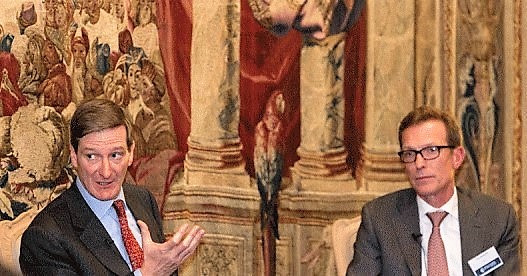
The French Chamber of Great Britain's 5th cross-cultural debate took place at the French Ambassador's Residence in London in December 2016. The debate was sponsored by Airbus. It was both constructive and rich in content. The two speakers and the chair all have in depth knowledge of both French and British cultures.

Thinking differently
The debate quickly exposed different ways of thinking and reasoning between France and Britain. The French are more inclined towards abstract thinking; whereas the British are more interested practice than theory. The priority is that it must work for the British.


Pic of the two speakers during the debate
Dominic Grieve (left) and Yann Bonduelle (right) during the debate

Top-down French thinking is often misunderstood in Britain. The French need a philosophical 'framework' in which to work. The British like a more pragmatic approach; the French want everything well-defined within boundaries before moving ahead. The British don't even have a written Constitution, relying instead on precedents in Law. The French approach can end up with the perfect solution to a problem that has moved on in the meantime. Pros and cons emerged from both nations' approaches.

British politics is adversarial. French politics is conducted behind the scenes more. Ideas have value. The British do not like a public discussion of ideas. It is not regarded as a compliment to be considered an 'intellectual' in Britain.

Hybrid cultural approach
A hybrid approach was recommended when working with cross-cultural teams. The British like executive summaries. The French like to receive lots of information to consider first. The best approach is to give the British the 3 bullet points that they want first and move onto the framework required by other nationalities. Then have the debate.

Cultural debate evening at the French Ambassador's Residence

Education systems
The roots of the different French and British approaches trace back to our respective education systems. The French approach is to examine a concept to find its flaws. If it proves valid, it will be adopted. The British attitude is more inclined to 'get on with it'. The result can be that the British don't think through the consequences in 4-5 years' time. The British approach can therefore appear amateurish to the Germans and French.

The British education system has the upper hand when it comes to positive encouragement. It leads to a greater inclination to risk-taking in later life. The French system encourages pupils to conform. This makes it easier for French schools to rank pupils; whereas in Britain there is greater encouragement to find your 'sweet spot' and bolster self-confidence. A French lycée is competitive and critical with more negative reinforcement. The British system is seen as better at encouraging team-working from a young age.

Public v. State Education
The discussion moved on to discuss the differences between public and state education in Britain, as well as the perceived advantages of a very structured curriculum. Secondary schools in Britain may leave pupils with huge areas of 'ignorance' by contrast with the French system. It was felt that the French elite were well-educated.

Education v. Experience
Silicon Valley with its encouragement of out-of-the-box thinking and risk appetite received much admiration. This lead on to a discussion on preferences for experience over education in the UK and US. The French and Germans rank education more highly than experience. 

Education is not so essential for career progress in Britain and the UK. It is possible to find a 'side entrance'. Education becomes irrelevant once you have the experience. PwC abandoned the UCAS points system in its recruitment policy, as it was a huge predictor of social class. PwC now attracts a more diverse range of job applicants who are progressing very well and beyond expectations.


4 young people - 2 men, 2 women from different cultural backgrounds


Handling disagreement
The debate moved on to discuss direct and indirect approaches to disagreements. An indirect British approach can appear hypocritical. Courteous disagreement is a skill taught in British public schools. The intention is to have reasoned disagreements without offending. The British have developed a wider vocabulary to handle such subtle nuances.

In the South East of England, there can be a reluctance to face a disagreement. Some people may even say  'yes' to avoid a disagreement. Head further north in Britain and you will know more clearly where you stand. Here, a disagreement may even appear aggressive. Mediterranean cultures expose raw emotions in disagreements.

By contrast, academic French has a set vocabulary designed to impart complex ideas quickly without verbosity. You can't cut off a German speaker in mid-sentence or you may miss the word at the end of the sentence that conveys the real meaning.

Meeting styles
The most important person comes into the room last in a meeting in France. In British meetings, the focus is to put everyone at their ease for the discussions to follow. The French approach makes it clear who holds power in the room. No discussions will start until the Head arrives. In Britain, this strategy is disapproved of and can be high risk. Time equals money for Brits and they aren't inclined to wait.

Risk appetite
Silicon Valley has a huge appetite for risk and tolerance if a strategy does not work out. It was considered that there is still some stigma in the UK, especially in the Media. The French need 'more of the frying pan' - early pressure with the security of a safety net to improve their risk appetite.

The chair asked both men which quality they would export from each culture to create Utopia. Suggestions were French 'joie de vivre and 'bonhomie' and the UK's informality and 'unbelievable aptitude to make a deal'.

In conclusion, it was noted how learning about one language and culture opens the door to many other cultures. Cultural awareness is important even without language skills. We need to build bridges between cultures and between classes.

Pic of outstretched with loads of different miniature flags floating above theme
One language opens the door to many more cultures


The French Chamber's Cross-cultural quiz evening to be held at PwC's offices on 23 February 2017.


Pic of Yann Bonduelle speaking with his hands during the debate
Yann Bonduelle is a Partner and the UK Consulting Data Analytics Leader at PwC. His 150-strong UK team includes experts in Machine Learning, Natural Language Processing (NLP) and Artificial Intelligence (AI). He has a PhD from Stanford University in Engineering Economic Systems and an Electrical Engineering degree from INSA, Rennes, France.  The Frenchman’s international career with 8 years in California and 20 years in London. It makes him an ideal speaker to discuss working practices across cultures. 

Pic of Dominic Grieve MP
Dominic Grieve is the MP for Beaconsfield and a QC. He was the Attorney General for England and Wales and Advocate General for Northern Ireland from 2010-2014. He is  bilingual in French and English. He attended the French Lycée in London's South Kensington before studying history at Oxford University and Law in London. 

Pic of French Chamber's Senior Vice-President
Peter Alfandary, Senior Vice-President of the Chamber chaired the session (see first right). Peter is Head of Reed Smith’s French Business Group and has been involved in cross-cultural relations for over 30 years. 


Karen Andrews is a freelance French to English translator, transcreator, content writer and editor. She has a strong background in global marketing.

Email Karen for further information via karenanglicityen@gmail.com in French, German or English.

Photo credit:  Cross-cultural debate evening photos were taken by Joana Saramago. Other photo credits are noted in the properties tags for each photo.


Tuesday, 24 January 2017

Ruislip on the Map

Pic of lady's hands holding small London tube map on platform as tube passes

'Where is Ruislip?' This question has been raised so many times that I thought I had better answer it in a blog, especially for my international contacts. Ruislip is very accessible and is surprising close to many places you all know well. It is in the London Borough of Hillingdon with Heathrow airport just 15 minutes away by car. Hillingdon is the white area to the west on the map below.


ACCESSIBILITY
My nearest underground station is South Ruislip. This station is two stops before the end of the Central Line into central London. This gives me direct access to:
  • Oxford Street shopping and businesses
  • Soho's creative sector
  • Holborn for the French Chamber of Great Britain
  • Chancery Lane for the legal sector
  • Liverpool Street and Bank for the City of London and the financial sector.
Pic of Ruislip Manor station and railway bridge with its name from opposite side of streetUnderground Connections
Ruislip Manor and Ruislip Stations give access to both the Piccadilly and Metropolitan Lines. South Harrow via 114 bus is another option for the Piccadilly Line. 

This is an important connection for the French Institute, Imperial College London, a large French community and famous museums in South Kensington.


Railway Connections
South Ruislip also has access to Chiltern Mainline. This means that I have easy access to:
  • Wembley Stadium and business park
  • London's Marylebone station in around 20 minutes.
  • Euston and King's Cross to change to tubes for mainline UK routes to the north of London
  • Most importantly, Eurostar connections from St Pancras International Station to Paris, Brussels, Lille, Amsterdam, etc.
  • The Chiltern Line was extended to Oxford in December 2016.
Accessibility will improve even further once Crossrail or the Elizabeth Line opens. Ruislip is also part of the planned route for HS2.

Road Connections
Ruislip offers easy access to a number of motorways:
  • M40/A40 into Central London going east; Oxford and Birmingham heading north-west.
  • M25 London's orbital motorway to Gatwick Airport.
  • M4 corridor is the base for a number of IT companies heading towards Maidenhead (the Prime Minister's Constituency), Reading, Swindon, Bath, my native city of Bristol and Wales.
  • M1 for Luton Airport and the Institute of Translation and Interpreting (ITI) at Milton Keynes.
Local Business Meetings
For local business meetings the Ramada London South Ruislip Hotel is within walking distance of South Ruislip Station and my home. Manor Farm and Winston Churchill Hall also offer conference and theatre facilities.

MEANING AND PRONUNCIATION
Ruislip’s name probably comes from Old English words for "rush" and "leap", meaning a place where the local river Pinn was narrow enough to jump across.

Ruislip is not pronounced as it looks. My apologies to non-native English speakers! 

[ˈraɪslɪp]
Pronounce the first 3 letters as you would the cereal crop 'Rye'. Audio

HISTORY

Pic of grass mound and moat site of ancient motte and bailey with manor house in background
Ruislip dates back to Saxon times, when Manor Farm belonged to the landowner, Wlward Wit. Following the Norman Conquest in 1066, his land passed to a new Lord of the Manor, Ernulf de Hesdin.


Manor Farm House was built in 1508 and is still standing today. The lordship of Ruislip Manor passed to King's College Cambridge in 1451.


Pic of Ruislip Manor House
Ruislip Manor Farm House

LOCAL MPS
The local Member of Parliament (MP) for Uxbridge and South Ruislip is Boris Johnson. He is the former Mayor of London and is now the UK's Foreign Secretary. 

The MP for Ruislip, Northwood and Pinner is Nick Hurd. He is the Minister of State for Climate Change and Industry within the Department for Business, Energy and Industrial Strategy (BEIS). He is the eldest son of Douglas Hurd, former Foreign Secretary under Margaret Thatcher and John Major.


Karen Andrews is a freelance French to English translator, transcreator, content writer and editor. She has a strong background in global marketing.

Email Karen for further information via karenanglicityen@gmail.com in French, German or English.

Saturday, 19 November 2016

Anglicity's Top 2016 Business and Cultural Blogs

Pic taken inside main foyer of European Parliament of line of Member States' flags

2016 has proved a busy year for blogging. Unfortunately, any review of 2016 is not complete without a mention of Brexit. I think it is especially important for us to stress to current and potential clients how much we value our European connections.

The end of 2016 is fast approaching, so let’s recap on the year’s most popular blogs as we did in 2015. The most popular posts were the lists of largely European conferences and events. Many readers commented on how useful they found them. Thank you!

Mixing Business and Culture
Cultural posts are very popular. They are part of my marketing strategy - not a whim or a travel log. They reach out to both clients and colleagues. Cultural awareness is an essential part of translation. It is also an easier route to engage clients about translation issues.

When working with France, it is important not just to focus on business aspects. I noted with interest recently that a top tip for the British working with France is to:

‘Show an interest in French culture, history and society’

My blog is not just for France or French-speaking countries. I never cease to be amazed by my blog’s analytics and the number of countries that it reaches worldwide. It’s not all about high numbers. Sometimes a blog with just 40 readers can be more effective in reaching new clients than one with hundreds of readers. That said, here are the most popular blogs of 2016:

Top 3 Event lists:


Other Blogs:

Photo blog of visit to Comic Art Museum in Brussels. Status of comics in Franco-Belgian culture. Tintin, Asterix, the Smurfs. Humour of 'How to become Belgian'.
Post from 21 February 2016

Dutch language and culture taster class at EU Representation in the UK's home in London. A highly entertaining and humorous event.
Post from 18 March 2016

Reflections from music and robots to machine translation. Why you should choose a professional human translator for creative marketing translations.
Post from 3 April 2016


Review of the 1st European Conference bringing freelance translators and language service providers together in Barcelona. Focus on communication, relationships, growth and technology.
Post from 18 February 2016


Commemorative display at the RHS Chelsea Flower Show. Created for Anzac Day, remembering the Battle of Verdun and Somme Centenaries and vigils.
Post from 29 May 2016


Transport for London's use of Big Data. London's transport challenges, data collection, planning and overcrowding. Future plans for open data and a personalised data service for passengers.
Post from 25 April 2016
Reflections on Brexit on the centenary of the Battle of the Somme. 
Post from 30 June 2016


Happy reading!

Thursday, 10 November 2016

Hillary’s Glass Cliff


Tweet of the Ambassador, Chair, Chamber MD and two speakers

The French Ambassador to the UK is a woman. The President and Managing Director of the French Chamber of Great Britain are both women. The main speaker at the French Résidence was a woman. There was a record turnout of aspirational women at the French Chamber’s Women, Inspiration and Leadership event. It was the eve of the American elections. There was a huge air of anticipation that we would wake up in the morning to the first woman President of the United States. It was not to be.


The glass cliff was debated. Why is it that women often only get the chance at leadership in times of crisis? Is it because they are more likely to succeed at such times? The odds of failure are higher. Or are women better at calming a storm?

Pic of glass walkway hanging from cliff edge


The vile Brexit referendum and vitriolic US election campaign are enough to put women off politics for good. Both results have revealed huge divisions in modern-day society and a clamour for change. While some of us struggle up the stairs to the top floor; others get to take the lift or elevator.

I greatly admired Hillary Clinton’s magnanimous speech in what must been an utterly heart-breaking day in her life: the end of her dream.

Many women pull up the ladder once they reach the top. It seems extraordinary that many white women voted for Trump. Undoubtedly, Hillary Clinton made mistakes. You never get to high office without making mistakes. The standards by which men and women’s actions and words are judged are unequal. Even women were prepared to excuse Donald Trump’s utterances as merely locker room talk.

A woman in business or politics walks a thin line between sounding too bossy one minute and too weak the next. She feels pushed
  • to work harder than anyone else for recognition and promotion;
  • be comfortable with every element of the job specification in advance; 
  • be three times as good as any man in the same role.
Childcare costs may swallow all or most of her salary. She learns to dodge the largely female daggers out for her dress, shoes, hairstyle, voice or accent. Developing a very thick skin is a pre-requisite for survival.

As often in business, the best qualified, most experienced candidate for the job didn’t get the job. It was hardly about policies. It was character assassination. Hilary Clinton was on the absolute last step before pushing through that highest and hardest of glass ceilings: the American Presidency.

Even in her most painful moment, she sought to inspire others to push on through the setbacks in their careers ahead. She urged all to:
“Never stop believing that fighting for what is right is worth it.”
Not only did Hilary Clinton calm rather than stoke a storm, she took the time to send the elevator back down:

“To every little girl in the world: never doubt that you are valuable, powerful and deserving of every chance and opportunity.”

Hillary Clinton failed to shatter the glass ceiling. She did amazingly well in the face of the glass cliff.


More on the Glass cliff: