Showing posts with label crisis. Show all posts

Thursday, 10 November 2016

Hillary’s Glass Cliff


Tweet of the Ambassador, Chair, Chamber MD and two speakers

The French Ambassador to the UK is a woman. The President and Managing Director of the French Chamber of Great Britain are both women. The main speaker at the French Résidence was a woman. There was a record turnout of aspirational women at the French Chamber’s Women, Inspiration and Leadership event. It was the eve of the American elections. There was a huge air of anticipation that we would wake up in the morning to the first woman President of the United States. It was not to be.


The glass cliff was debated. Why is it that women often only get the chance at leadership in times of crisis? Is it because they are more likely to succeed at such times? The odds of failure are higher. Or are women better at calming a storm?
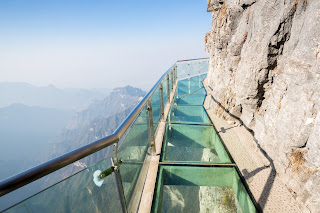
Pic of glass walkway hanging from cliff edge


The vile Brexit referendum and vitriolic US election campaign are enough to put women off politics for good. Both results have revealed huge divisions in modern-day society and a clamour for change. While some of us struggle up the stairs to the top floor; others get to take the lift or elevator.

I greatly admired Hillary Clinton’s magnanimous speech in what must been an utterly heart-breaking day in her life: the end of her dream.

Many women pull up the ladder once they reach the top. It seems extraordinary that many white women voted for Trump. Undoubtedly, Hillary Clinton made mistakes. You never get to high office without making mistakes. The standards by which men and women’s actions and words are judged are unequal. Even women were prepared to excuse Donald Trump’s utterances as merely locker room talk.

A woman in business or politics walks a thin line between sounding too bossy one minute and too weak the next. She feels pushed
  • to work harder than anyone else for recognition and promotion;
  • be comfortable with every element of the job specification in advance; 
  • be three times as good as any man in the same role.
Childcare costs may swallow all or most of her salary. She learns to dodge the largely female daggers out for her dress, shoes, hairstyle, voice or accent. Developing a very thick skin is a pre-requisite for survival.

As often in business, the best qualified, most experienced candidate for the job didn’t get the job. It was hardly about policies. It was character assassination. Hilary Clinton was on the absolute last step before pushing through that highest and hardest of glass ceilings: the American Presidency.

Even in her most painful moment, she sought to inspire others to push on through the setbacks in their careers ahead. She urged all to:
“Never stop believing that fighting for what is right is worth it.”
Not only did Hilary Clinton calm rather than stoke a storm, she took the time to send the elevator back down:

“To every little girl in the world: never doubt that you are valuable, powerful and deserving of every chance and opportunity.”

Hillary Clinton failed to shatter the glass ceiling. She did amazingly well in the face of the glass cliff.


More on the Glass cliff:


Sunday, 24 January 2016

Ordinary Europeans for Nobel Peace Prize?

Pic of 3 silhouettes of refugees on blue and white background of Greek flag


Ordinary Europeans have shown extraordinary courage and selflessness towards the many refugees who have arrived in their lands. When others turned them away with barbed wire and troops, the Greeks and Germans welcomed them with true humanity.

Greece is not a rich country. We are all aware that the Greek people have suffered the most in the economic crisis under Austerity. Still they remind us of what is important in life: our common humanity.

A nomination is currently doing the rounds for the Greek islanders to be nominated for a Nobel Peace prize. They helped those in need and mortal danger without any expectation of reward. A smile was enough.

The German people also extended an extraordinary hand of welcome. Integration will not be easy. There are already and will be many problems. A Nobel Peace Prize will be a source of inspiration. When the difficulties ahead cause some to doubt, it will continue to encourage.

The Greeks and Germans do not have the easiest relationship in Europe. Shouldn't both peoples be recognised for their part in handling the refugee crisis?

The nomination is in our hands. Yes, we could nominate a high profile figure. Doesn't it give a better message to the world when ordinary people are nominated? Together the Greek and German peoples showed us the more compassionate Europe and World that we would all like to live in.

For such leadership, without hope of recognition, the Greek and German peoples should be recognised together.


Link to the Greek Islanders nomination:
Avaaz


Related stories:

Common dreams on Greece

Guardian on Greece

Germany welcomes refugees

German bilingual translation efforts to make families feel welcome and settle more easily

Tuesday, 12 January 2016

Translators are like glue

 
Pic of man's hands applying glue with brush for next sheet of wallpaper
Applying the glue behind the visual c. Patryk Kosmider


Professional translators are like glue... invisible glue. 

The aim is to make the join between two cultures as seamless as possible. 

It is easy to underestimate the value of a wordsmith's contribution to a marketing campaign. You don't see all the deliberations over the right term, tone or phrasing. Yet, without a translator's considered input, even the most brilliantly creative visuals can fall flat... or worse.

A pharmaceutical crisis
The importance of the glue reminds me of my first job at the UK sales agency of French glass manufacturers' Saint-Gobain Desjonquères. I worked for the pharmaceutical bottle division. 

One day, a buyer at one of our major pharmaceutical customers called urgently. Labels would not stick to our competitors' bottles. They had changed the coating specification.

It was a nightmarish situation for our customer. The production line was down and wasting money. Product was ready, but without viable containers. Orders were stacking up.

I arranged for the urgent delivery of all our existing factory stock. I also booked urgent new production runs with my French colleagues. 

I don't remember the exact figures now. I do remember dispatching millions of extra bottles to a very grateful customer that year.

The crisis came about because of poor bonding between the coating, glue and label.

Tales of woe  
The internet is littered with tales of woe because someone has cut corners with translation. Some brand-damaging stories are still shared decades later (as my old story above). Social media spreads these tales faster than ever before.

Choose the best
Many translators love to share these stories as examples of what can happen without their professional services. Personally, I prefer to try and demonstrate the positive. However, it isn't easy to see the glue when the bond is good. It is easy to think an alternative, cheaper solution might work ... until a crisis strikes.

Don't come unstuck. Stick with a professional translator.


Wednesday, 16 September 2015

Translating in 3D


pic of 4 sets of glasses set back from each other to give 3D effect

A recent Anglicity blog dealt with perspective and thinking in 3D. Translators have to think in three dimensions. Their deliberations go far beyond the flat text. They also need cultural sensitivity. These abilities set the best translators apart from machines.

Social media translations
Today, automated translation is often used to translate social media. It is great for gist translations in situations that do not require 100% accuracy. The end result can sometimes be flat and one-dimensional. There is a heavy reliance on existing translations. There is no "extra value". The approach may be fit for purpose, but not always...

History in a tweet
The tweet below is loaded with historical and cultural significance. History is repeating itself. In reverse.


Added value of human translation
If you were not alive in 1956 or are unaware of Hungarian history, you need an informed translator to help you understand the full meaning. You need a translator to provide the missing dimensions for you - to put the subject into 2D, and then into 3D.

2D = history - You need your translator to advise you on the history - i.e. to take your perspective back in time. Such information may influence your decisions on what action to take. There may be potential in-country reactions to consider. This informed perspective will influence the tone of your communications.

3D = contemporary background - You need your translator to advise you on the current situation in the country and sentiment towards your country - i.e. to project your thinking forward. You need to fully understand the tweet and its sensitivity before taking action. Again, you need to establish the correct tone for your communications.
 
Added value of context 
The translated tweet is flat without its historical and cultural context. If you use an automated translation without a translator's advice, you could get an explosive reaction and damage your brand. Timing is important. You may need to avoid sensitive or simply busy periods. One region may be more sensitive to your message than another.

Automated translation is preferred when time is of the essence. Going too fast to assess cultural and historical significance can sometimes backfire. A measured human approach can win the race without regrets.

Refugee crisis call to humans
There is a refugee crisis in Hungary. Cries have gone out for help. Not to machines. No. Urgent help has been asked of human translators and interpreters. It seems that human is best in a crisis after all.


For information about Anglicity's services, email karen@anglicity.com.

Thursday, 10 September 2015

COP21: World's Last Chance


Pic of two hands with world map painted on them

"We are counting on you!" so said the children in a video clip shown at the Élysée Palace. France staged its COP21 launch in Paris today. The 2015 United Nations Climate Change Conference will take place in Paris from 30 November to 11 December. The COP21 conference is the world's last chance to save the planet.

There was no mincing of words in Paris this morning. No more disputing whether climate change is happening. No more quibbling over how many degrees are necessary to stabilise the planet.

The world must act.

180 nations must commit and act cooperatively together. No more "we'll start next year". "Later" will be too late. Failure cannot be on the COP21 agenda.

COP21 is not about saving pretty little butterflies. It is not about saving cute animals. It is about saving mankind.

Our children will hate us for failure. Our descendants would hate us for all eternity... except if COP21 fails they won't be around to hate us.

The key to success at COP21 is telling the truth about climate change. The refugee crisis has given us a mere taster of the human agony of mass migration.

Climate change will hit the weakest nations the hardest... those with the weakest voice at the negotiating table. It calls on the more powerful nations to be magnanimous. The key word of COP21 must be "solidarity".

Short-term, blinkered, self-interested deals will ultimately rebound. They will condemn us all to share the same dire fate.

All eyes will be on Paris for two weeks in this massive conference at Le Bourget. The French are keen to set the world an example. The conference itself is to be a massive exercise in sustainability. All participants will be invited to use public transport to keep the conference's carbon footprint as low as possible. French gastronomy will be on offer with a keen eye on reducing food waste.

Anne Hidalgo, the Mayor of Paris, will host 1,000 world mayors. They will seek not only to share local ideas but ways to act together. Their plans and actions should help us to understand what this global conference will mean for us on a more local level.

The most striking comment quoted at the launch came from a Moroccan woman: 

"You are going to decide who will live or die..."


If world leaders take short-cuts for short-term popularity at COP21, the consequences will be enormous. They should bear in mind that they will effectively be signing a greater number of death warrants. Every now and again, they should check their consciences by looking at the young conference helpers around them.

There are tough choices ahead - choices many ordinary citizens couldn't bear to contemplate. We have to place our trust in our leaders to become the statesmen demanded by our planet's crisis.

We'll be watching and counting on them.