Thursday, 5 March 2015

Overcoming the "curse" of technical knowledge


An origami swan
An origami swan - not as simple as it looks © M. Gove


An expert is very close to the technical details of his field on a daily basis. The terms become so familiar. He forgets how unfamiliar those same terms once were. This is known as the curse of knowledge.


Different target audiences
Many experts are unable to explain their subject simply. "Doing simple" feels very uncomfortable. It feels like you are "dumbing down" years of hard-earned education and painstaking research. Yet, there are many times when an expert needs to persuade or communicate with target audiences outside his field - for example:

·      to access funding and support
·      to maintain or renew existing funding
·      to influence policy-makers
·      to access the Media - both trade and non-trade press
·      to debate ethical and other issues with university management, etc
·      to work with the private sector
·      to launch and market a prototype or product
·      to seek advice from experts in other fields
·      to report on research progress
·      to present findings at international/multicultural conferences
·      to publish online, newsletters, emails, short videos, etc
·      to take advantage of the growing trend for MOOCs
·      to engage with the general public.

Academic writing
Academic writing often encourages an intellectual approach. It is seen as good to sound clever and obscure. You are supposed to sound like an expert. However, it is also said that you do not know your subject well enough if you cannot explain it simply. 

Cultural differences
There are also cultural differences in approach to academic writing. When studying in France, I remember English students being berated for a meandering style. Our writing was likened to that of the great French Renaissance philosopher Montaigne. As I loved Montaigne's essays, it felt like a compliment. However, if you wish your writing to be accepted in another culture, you have to conform to their current expectations and norms.

Rewriting
German academic writing expects the reader to find his own way. English academic writing requires clear guidance for the reader. English is the language of science. You need to publish in English if you wish to reach the widest possible audience. Rewriting can improve readability for target audiences outside the academic world. Machine translation will not convert academic German into academic English. Nor will it create material fit for 21st Century digital consumption. Greater attention needs to be paid to presentation and formatting as well as technical content.

Readability
Improving the readability of a text does not mean lowering the research's value or content. The simplest way to improve readability is to talk your subject through with someone outside your field. Explain your story and aims to them. A technical writer or professional translator is the perfect choice as they work with different target audiences on a daily basis. Their questions will help you fine-tune your material for your new audience. Your message is much more likely to be heard and understood.

Choose an expert
Simplicity may look simple. It takes time and thought. It is easy to underestimate the skill involved. It requires the hard-earned education and painstaking effort of an expert to make technical translation and writing look simple. 

If you would appreciate some expert help with your technical communications, email karen@anglicity.com or call Karen on +44 (0)20 8581 9369.

Karen Andrews runs
Anglicity Ltd. She is a
technical writer and 
translator with over
15 years' marketing
experience. Anglicity offers
marketing consultancy and
content marketing with a 
particular focus on innovation.


Wednesday, 4 March 2015

Gym with a view


Ruislip Lido Outdoor Gym

When I want to get away from my desk, my favourite local spot is Ruislip Lido. Ruislip offers easy access to Central London and Heathrow Airport, but the countryside and various nature reserves aren't far away either. A number of Anglicity's blogs have been written in my head as I walked through Ruislip's woods and around the lake. I always find fresh air inspires me. 

copyright Karen Netto
View over Ruislip Lido towards the Water's Edge Pub


I can't say that I miss my old daily commute into Central London since turning freelance. Unfortunately, I have gained weight as a result. I used to follow a regular routine of walking up all the escalators on my way to work. I spent lunchtimes wandering in Green Park or St James's Park.  Obviously, these activities helped me keep the weight off much more than I realised.


I don't like gyms as a rule. I definitely don't like some of their tight contract clauses. I enjoy swimming if the pool is calm and quiet, but I would much prefer to exercise outdoors. My favourite activity is walking.


I was born in the green city of Bristol. I have fond memories of The Downs in Clifton and the Ashton Court Estate with its well-known International Balloon Fiesta. I was lucky to grow up in the area of the most famous English cheese: Cheddar in North Somerset. 

Cheddar Gorge, Somerset 


This is an Area of Outstanding Natural Beauty. I had the Mendip Hills, the Somerset Levels, Cheddar Reservoir and the Black Rock Nature Reserve as my "playground". With a limited country bus service, you either walked or rode your bike everywhere.


Calm, luminous swan among the frantic ducks


Ruislip Lido has the perfect solution for this "country girl at heart" to exercise. The outdoor gym has a wonderful view of the lake. I can "walk" on my favourite apparatus there (see picture). I can exercise while admiring the view. My project management article on LinkedIn and this blog was inspired by the fighting ducks and gliding swans on the lake.


Can you beat my inspirational gym with a view?


Karen Andrews is a freelance copywriter and translator based in Ruislip, Hillingdon. If you wish to discuss Anglicity Ltd's services, please email karen@anglicity.com or call Karen on +44 (0)20 8581 9369.


Sunday, 1 March 2015

Creativity and Light in Chihuly's Lumière Exhibition


By Patche99z (Own work) [Public domain], via Wikimedia Commons

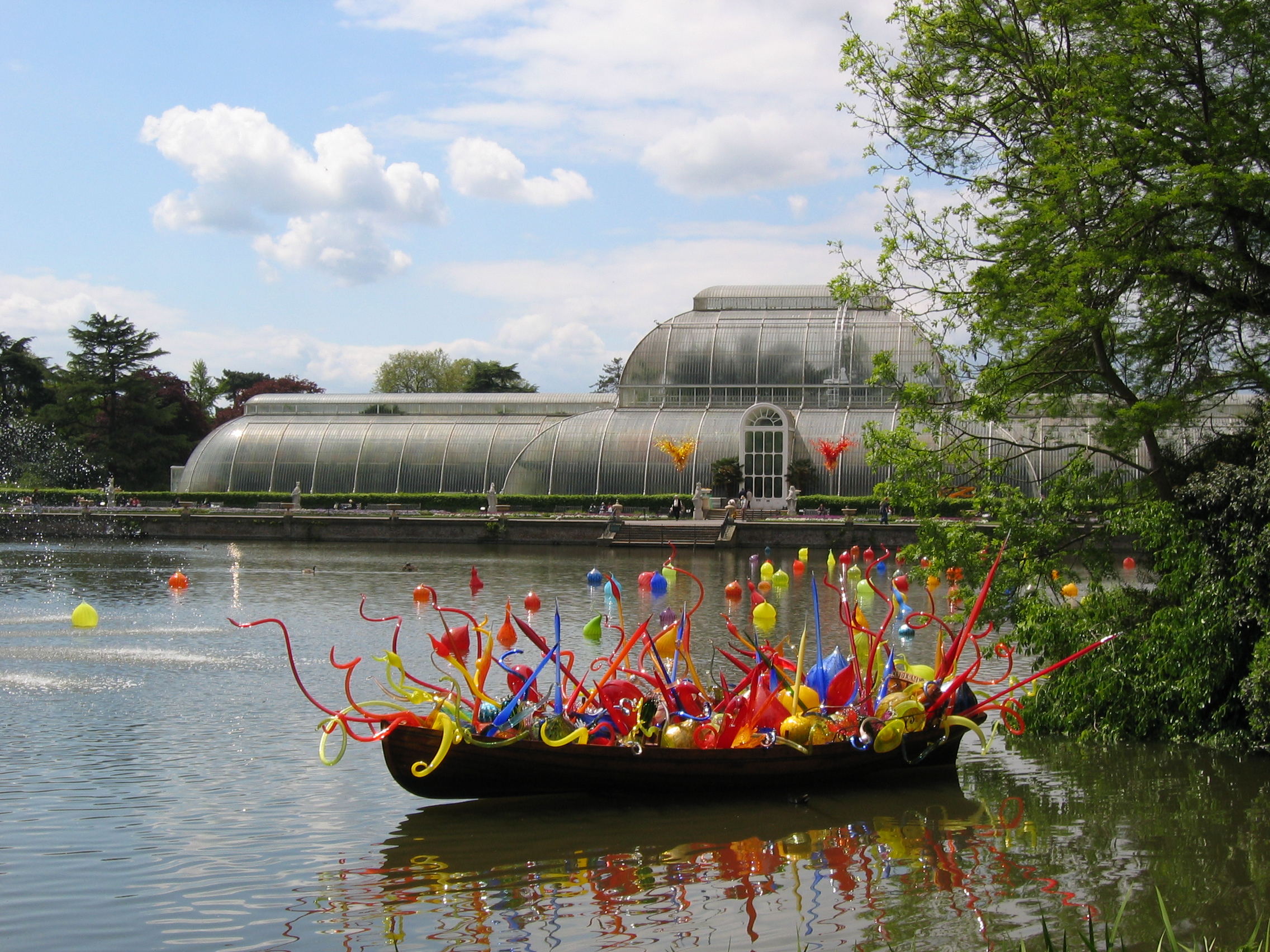
I first saw Dale Chihuly's amazingly innovative glass creations at his exhibition in the Royal Botanic Gardens at Kew in 2005. I recently discovered another highly creative Chihuly exhibition in London.

Royal Botanic Gardens, Kew
Kew Gardens is one of my favourite places to visit. I have spent many happy hours there with my family and friends over the years. Chihuly's creations within such very familiar settings had unexpected appeal. As you walked through the grounds and the glasshouses, there were so many surprises among the plants - and even in the lake (see above).

I instantly loved the American artist's contemporary, intricate designs. They are very colourful. I particularly remember his bright yellow "Sun" with its enormous glass "squiggles". I have never seen anything so original in glass. Chihuly's chosen medium has a particularly strong appeal with its transparent, luminous and reflective qualities. I still have a strong memory of this unique exhibition from 10 years ago.


London's New Bond Street
On my way to the Chinese Whispers exhibition featured in earlier blogs, a glow ahead caught my attention in the fading evening light. The glowing light came from the windows of the Halcyon Gallery in New Bond Street. Chihuly's creativity had drawn me in again.

Glowing light in window from Chihuly's light painting
Glowing window from Chihuly's acrylic light painting

Lumière Exhibition
The art gallery was holding an exhibition of Chihuly's sculptures and acrylic light drawings. This time, the light paintings caught my particular attention. My favourites used a mixture of extremely bright colours. The exhibition was entitled Lumière after the French word for "light". Lumière also conjures up the Age of Enlightenment in French philosophy and the early French filmmakers, the Lumière brothers. Thus, the title conveys both light and a sense of groundbreaking vision.

I later discovered from an online video how the pictures and sculptures were made. The acrylic paintings are lit from behind in light boxes as well as from the front. This light adds even greater intensity to the colours.

I was surprised to learn that Chihuly works with a glassblowing team. The glassblowers bring the creative vision into being under his enthusiastic supervision. There is no doubt that Chihuly is the innovator and visionary.

Such abstract designs and bright colours may not be to everyone's taste. It can take some time to adjust and appreciate the creativity. Historically, the work of master artists and great innovators has not always been appreciated in their lifetime. Chihuly is certainly a unique artist.

Lumière is a very appropriate title for this exhibition for 3 reasons:
1. It uses light creatively
2. It is the work of a leading and groundbreaking artistic "light"


Karen Andrews of
Anglicity Ltd
offers content
marketing
and transcreation 
services - with a 
particular focus 
on innovation.

Friday, 27 February 2015

10 communication challenges only humans can solve

The strength of human communication versus machine communications

As an international marketer, your head must be spinning. Technological advances are demanding so much of your time and energy. Rest assured, technology won't change everything about international communication. Anglicity suggests below what won't change* about your future communication needs:

1. The customer will remain human.

2. The customer will remain delightfully and almost wilfully unpredictable
            - despite all market research
            - despite all market predictions
            - despite endless analytics.

3. There will always be a need for well-written, original creative copy with emotive appeal in the customer's own language.

4. Even the best machine translation will always present a brand risk without human input, because languages will keep evolving.

5. There will be an increasing need to customise your message for the idiosyncrasies of different global and regional target audiences.

6. Strategic marketing planners will always need advice on how to adapt to
            - the uneven roll-out and uptake of new technologies and devices globally
            - frequent updates and new trends
            - differing media preferences globally
            - differing attitudes and preferences between the generations.

7. There will always be a need for language experts with advice on cultural, linguistic, historical, legal and regional sensitivities. Fail to consult at your peril.

8. Making both the original and the translated word work effectively with pictures, in presentations and in videos will remain a challenge.

9. There will always be a need for conscientious communicators who check every last detail. Experienced marketers like you don't take short-cuts or risks with their brand.

10. There will always be innovative businesses needing expert guidance and consultancy services as they venture into export markets for the first time.

Yesterday's world is history. There are always new challenges to face.  Technological challenges are nothing new to the translation world. Experience of facing yesterday's challenges counts.  It demonstrates the ability to adapt to the new challenges ahead. Today's human translators are evolving into the linguistic, cultural and marketing experts that international marketers like you need. When your head is spinning with all your communication challenges, isn't it reassuring to speak to a human expert instead of a machine? Do you agree?

If you would appreciate some human help with your international marketing communications, email karen@anglicity.com or call Karen on +44 (0)20 8581 9369.

Karen Andrews runs
Anglicity Ltd. She is an
experienced international 
marketer with 15 years' 
experience. Anglicity offers
marketing consultancy,
content marketing, translation
and transcreation services with a 
particular focus on innovation.

Tuesday, 24 February 2015

Stephen Hawking: from black holes to film

A personal review of the Theory of Everything


Eddie Redmayne deservedly won the Best Actor Oscar. His performance as Stephen Hawking in the Theory of Everything is truly outstanding. I saw the film recently at Imperial College's Union Cinema. I found it very moving on a number of levels.


The screening at Imperial College was preceded by a physics lecture. The professor had acted as an advisor during the making of the film. The film itself only really touches on Hawking's scientific contributions. It keeps to the more personal side of his story and is based on his ex-wife's book.

Creative scientific mind
It was Stephen Hawking who dealt with science's "mental block" over black holes. It often takes someone with great creativity of insight to make an important step towards new thinking. Hawking's great insight was that black holes are hot. In the film, we see how that creative leap came about. His wife had to leave the disabled scientist halfway through dressing to attend to their baby upstairs. Hawking got his head stuck in his jumper. He grew hot peering through the jumper's threads at the fire in the grate. The heat provided the inspiration he needed.

For me, the film had some deep personal and family resonances:

1. Shock of Hawking's ALS diagnosis
In his twenties, Hawking was diagnosed with Amyotrophic Lateral Sclerosis (ALS). The doctor's stark announcement gave him just two years to live. It brought back the debilitating shock of sitting in Frenchay Hospital in Bristol one Christmas. I sat with my devastated mother awaiting the outcome of my youngest sister's operation for a spinal blood clot. She was also in her twenties. Her odds were judged as even worse: a 5% chance of survival and paralysis from the neck down if she survived. She survived. Despite paralysis in her left side, she still walks today. A story of sheer willpower like Hawking. The scientist has lived for an additional 50 years.

2. Humour
The film had some very funny moments. Hawking's humour has obviously often kept him, family and friends going through difficult times. My sister was the only survivor from her friends on the ward. I shall never forget the often black humour. Laughter rang out as the patients sought to sustain each other.

3. Real life
The film does not gloss over the difficult choices and agonising decisions. It reflects the trials and tribulations of real life. I really felt for Jane Hawking at times. The Hawkings' marriage ultimately failed. I loved Stephen Hawking's wonder at the three children that he and his former wife had made together. I too now marvel at my own two "babies", as they tower over me.

In a lecture at the end of the film, Hawking is asked about his philosophy of life. He speaks of boundaries.
"There should be no boundary to human endeavour. No matter how bad life seems, there is always something you can do and succeed at. While there is life, there is hope.”


Karen Andrews runs
Anglicity Ltd. She is a
freelance content writer
and French to English
translator. In this blog, 
Karen draws upon her 
both her work and life 
experiences.


Please contact Karen via email karen@anglicity.com or call +44 (0)20 8581 9369 to discuss Anglicity's content services.


Thursday, 12 February 2015

Red Cross London Bridge Walk


My younger son and I have signed up to do the British Red Cross Red Shoe Walk in London on Saturday 9th May 2015. The 8- or 4-mile walk takes you crisscrossing from bank to bank over London's bridges. We last did the walk in May 2013 and had a great time together. This year we have a special reason to help the Red Cross raise funds. Why not join us?


Until the latter half of 2014, I had always associated the Red Cross with disaster relief overseas. I returned from the International Federation of Translators' Conference in Berlin last August to a crisis in my own family. My mother (Carole Andrews) had been diagnosed with breast cancer. As a result, I am now aware of how the Red Cross helps with crises in the UK too.

Independence
Today, families are often separated geographically across long distances - sometimes even with family members abroad. My sisters and I we are scattered between Somerset, South Wales and London. My mother maintains a fierce independence in her own home in North Somerset. Ordinarily, she is the one running around after everyone else and their health. She suffers with rheumatoid arthritis. Still, she keeps going when lesser mortals would have long given up.

No fuss
When she first retired, my mother used to deliver meals on wheels to local residents who were sick and housebound. She regularly drives friends to the doctors' or hospital appointments. There was no shortage of volunteers to help her out. Typically, she would not tolerate the "fuss" for herself.

British Red Cross volunteers
When it came to the daily radiotherapy treatment, the British Red Cross came to the rescue. They operate a scheme for patients in Musgrove Park Hospital, Taunton. Given my mother's experience, I would recommend that it is extended elsewhere. Every day, a different Red Cross volunteer drove her to the hospital and returned her home afterwards. Rather than having family fussing and making her nervous, she enjoyed speaking with someone new every day. As a thank you, my son and I are going to do the London Bridge sponsored walk in May 2015. 

Thank you to Musgrove Park Hospital
We would also like to say a big thank you to all the staff at Musgrove Park Hospital for their care and courtesy at all times. They really do follow Kate Granger's compassionate #Hellomynameis campaign. Once an elderly person approaches 75 or over, they worry that hospitals no longer treat them as considerately as younger patients. We could not fault Taunton's Musgrove Park Hospital. They were brilliant. Their patient information was a godsend at a worrying time. There was no need to scare ourselves with information on the internet. The clear, well-structured little booklets spared my mother from having to explain her treatment over and over again to all her concerned family and friends.

London's Red Shoe Walk
The London walk starts at Tower Bridge. You can choose to stop after 4 miles around Embankment or continue for the full 8 miles to Albert Bridge in Battersea. You dress in red and wear red shoe covers. My own "red shoes" were pretty battered by the end of the walk last time (see below).


It was a great mother-son bonding experience. James certainly jumped at the chance to do the walk again. At the finishing line, we both received certificates. See the picture of us above at the 2013 finishing line.

If you would like to sponsor our 2015 walk, please follow the following link to our Virgin Money Giving fundraising page for the British Red Cross http://uk.virginmoneygiving.com/team/Red_Bridges

Alternatively, why not join us on the walk with your friends and children too? Our current team of two is called the "Red Bridges". If there is enough interest, I may also sign up for the Severn Bridge walk the following week too. There are also Red Cross walks taking place in Oxford and Windsor. Take a look online for further information on dates, etc. 

Any support will be very much appreciated. Thank you!


Sunday, 1 February 2015

Visible translators - a new business model


Project manager with virtual team of coworking translators

The translation business model has seen little change for decades. Technology is challenging the status quo. Large, inflexible agencies and big technology solutions are not the answer for all clients.

Existing business models
Existing models often place linguists in charge of translation businesses or non-linguist entrepreneurs in the driving seat. Either party is felt to be too language-focused for business or too cut-throat and profit-oriented for the art of translation. Either way, the most important person in the quality chain, the translator gets squeezed. Not enough fight or too much - the result is the same.

Translator investment
As the translator's earnings are eroded, so too is his or her ability to
·      buy or rent a decent home and office
·      maintain fluency and keep source/target languages up-to-date
·      attend translation conferences and relevant trade fairs at home and abroad
·      equip an office and buy the latest software
·      make an ongoing investment in CPD
·      join professional associations and attain certifications/qualifications

Even experienced, full-time translators complain that they cannot afford many of the above. Current agency rates often fall short. Clients expect all the above in a professional. As a freelancer, I want to offer my clients the sort of service that I expected as a client. I therefore place great importance on CPD and attending trade events to keep up-to-date.

Future options
If existing translation agencies are unable or unwilling to increase the rates to freelancers, then there are two options. Option one is to leave the translation community all together. Option two is to cut out the middlemen.

Unprecedented opportunity for rate increase?
Agencies need to capitalise on high industry growth and improving economic growth to increase rates to translators. As a former client, I can see that the increased professionalisation and industry standards offer an unprecedented opportunity to justify an increase to clients. If not, then increasing numbers of translators will be forced to cut out the middlemen and work with direct clients at agency prices. Their alternative is to leave the profession. Many well-qualified legal interpreters have already been forced outside their chosen profession by the Ministry of Justice Framework Agreement.

Coworking with SMEs
Groups of freelance translators are particularly suited to working with SMEs for example. Large agencies do not have the necessary flexibility to give them all the help they need. A client who is new to translation buying, cultural issues and exporting can find that greater flexibility in working with freelancers.

At a translation conference several years ago, I heard about a Dutch company that put the translator back at the heart of the translation process. His team of translators work directly with clients. I would like Anglicity's future growth to take a similar path. Other business models will undoubtedly co-exist. I believe that there is a future for specialised, freelance coworking teams with direct client contact.


Karen Andrews is an
entrepreneurial freelance
translator and content
writer. Her past experience
as a client gives her a
near 360º perspective
on the translation
community.