Showing posts with label AI. Show all posts

Monday, 13 March 2017

Robots and Humans (+Video)


Robots Exhibition at the Science Museum, London from Karen Andrews on Vimeo

Pic of grey, robot-shaped ticket desk
Cute toys? Job thieves? Creepy threats to mankind? Robots, the Science Museum's latest exhibition, introduces many topical preoccupations.

As you stand in the lobby queue for your timed entry slot, you see two cute, toy-like robot ticket desks. One desk was initially unmanned on my arrival; the other had a long queue. 


Pic of around 20 adults & children in lobby queue for Robots Exhibition

You see a 3-tiered bank of robot eyes on your right as you wait. 

No-one paid much attention. 

Then, creepily... the eyeballs moved.


The first exhibit inside the entrance catches everyone by surprise. An animatronic baby raises a mix of emotions in visitors. So life-like. The eyes have the knowing look of an old soul seen in some new-borns. It moves like a baby. And yet, something is missing. 


Pic of brightly-lit baby animatronic with visitors standing back from it
Visitors stand back from the animatronic baby

The movements have a controlled pattern. No welling maternal instinct rushes to rescue the helpless creature from its stake on the wall. As blue lights change to pink and pink to blue, the urge is to step back and away instead.

Why? What makes a human baby such a unique creation? So utterly helpless at birth and yet a powerful learning machine. So determined without programming, yet some personality traits seem 'built in' from birth - or even before.


Close-up of animatronic baby against brightly-lit, quilted-effect background
Close-up of animatronic baby in Robots Exhibition

The Science Museum's Robots Exhibition takes you on a journey: Man's 500-year quest to make robots human. It leaves you asking questions about the current direction of robotics. It leaves you marvelling at the unique creation that is every single human baby.


Single-shuttle loom
The exhibition is divided into 5 sections representing 5 different periods in the history of automation. 

The first section is called 'Marvel'. It shows Man's early attempts at automation. 

The second section 'Obey' presents the Industrial Revolution. It turned men into robots, servants of the machine.


The first recognisable robots appear in the 'Dream' section. Many are film creations of an imagined future. Some are cute; some are downright scary. Many are mere toys.


Pic of a collection of small robot toys with text/film backdrop
...And nothing can possibly go ... worng...

Scientists take over from the film-makers in the 'Build' section. The obsession to recreate ourselves as machines reaches new heights. Researchers' efforts demonstrate the complexity of our bodies and minds. 


Coordinating vision, recognition, reaction & movement - tough for a robot

The sophistication gradually increases. Many robots in this section are not complete. We see an arm or a hand.  They still cannot match smooth, instantaneous human movements. 


Pic of one black and one white robotic hand in exhibition with tool outlines on backdrop
Sophisticated robotic hands are no match for human hands

The final section is entitled 'Imagine'. The robots on display are very recent productions for a museum. Robothespian dates from 2016. Science is moving so fast. AI's more recent and advanced developments are not on display. 

As children and adults interact with the robots, many of today's concerns become apparent. The UK's Robothespian is irritating; the Italian robot shows off; the Japanese news-reading robot is unnerving. Pepper, the French companion robot, is so popular that a crowd forms tightly around her.


UK's Robothespian of 2016

There are safety issues. Each robot is sectioned off from other robots and the public. Industrial robots can now work collaboratively with humans. Robots aren't toys any more.


Toyota's Human Support Robot

No single robot seems to combine all human activities and brain power as yet. It would need to be huge to do so. Remember the size of the original mainframe computers? Miniaturisation will come. 


It is proposed that robots should become care-providers for the young and elderly - i.e. the most vulnerable in society. Do we want or need that?

Young children and the elderly with dementia are unpredictable. The mobility, determination and unpredictability of  a news commentator's children went viral on Twitter this week. Are robots a match for this?

I also saw a video of children 'playing' with Alexa this week. They were running rings around her by proposing fake shopping list items. We would call it bullying, if Alexa were human.

How will we prevent artificial intelligence from learning how to bully? Do robots really need to take a human form?


Past Blogs on Robotics:


Karen Andrews is a freelance French to English translator, transcreator, content writer and editor. She has a strong background in global marketing.

Email Karen for further information via karenanglicityen@gmail.com in French, German or English.


Wednesday, 25 January 2017

French v. British Cultural Debate

Pic of French and British flags flying at top of flagpoles in opposite directions

The French Chamber of Great Britain's 5th cross-cultural debate took place at the French Ambassador's Residence in London in December 2016. The debate was sponsored by Airbus. It was both constructive and rich in content. The two speakers and the chair all have in depth knowledge of both French and British cultures.

Thinking differently
The debate quickly exposed different ways of thinking and reasoning between France and Britain. The French are more inclined towards abstract thinking; whereas the British are more interested practice than theory. The priority is that it must work for the British.


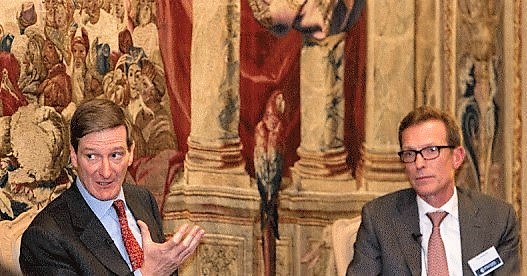
Pic of the two speakers during the debate
Dominic Grieve (left) and Yann Bonduelle (right) during the debate

Top-down French thinking is often misunderstood in Britain. The French need a philosophical 'framework' in which to work. The British like a more pragmatic approach; the French want everything well-defined within boundaries before moving ahead. The British don't even have a written Constitution, relying instead on precedents in Law. The French approach can end up with the perfect solution to a problem that has moved on in the meantime. Pros and cons emerged from both nations' approaches.

British politics is adversarial. French politics is conducted behind the scenes more. Ideas have value. The British do not like a public discussion of ideas. It is not regarded as a compliment to be considered an 'intellectual' in Britain.

Hybrid cultural approach
A hybrid approach was recommended when working with cross-cultural teams. The British like executive summaries. The French like to receive lots of information to consider first. The best approach is to give the British the 3 bullet points that they want first and move onto the framework required by other nationalities. Then have the debate.

Cultural debate evening at the French Ambassador's Residence

Education systems
The roots of the different French and British approaches trace back to our respective education systems. The French approach is to examine a concept to find its flaws. If it proves valid, it will be adopted. The British attitude is more inclined to 'get on with it'. The result can be that the British don't think through the consequences in 4-5 years' time. The British approach can therefore appear amateurish to the Germans and French.

The British education system has the upper hand when it comes to positive encouragement. It leads to a greater inclination to risk-taking in later life. The French system encourages pupils to conform. This makes it easier for French schools to rank pupils; whereas in Britain there is greater encouragement to find your 'sweet spot' and bolster self-confidence. A French lycée is competitive and critical with more negative reinforcement. The British system is seen as better at encouraging team-working from a young age.

Public v. State Education
The discussion moved on to discuss the differences between public and state education in Britain, as well as the perceived advantages of a very structured curriculum. Secondary schools in Britain may leave pupils with huge areas of 'ignorance' by contrast with the French system. It was felt that the French elite were well-educated.

Education v. Experience
Silicon Valley with its encouragement of out-of-the-box thinking and risk appetite received much admiration. This lead on to a discussion on preferences for experience over education in the UK and US. The French and Germans rank education more highly than experience. 

Education is not so essential for career progress in Britain and the UK. It is possible to find a 'side entrance'. Education becomes irrelevant once you have the experience. PwC abandoned the UCAS points system in its recruitment policy, as it was a huge predictor of social class. PwC now attracts a more diverse range of job applicants who are progressing very well and beyond expectations.


4 young people - 2 men, 2 women from different cultural backgrounds


Handling disagreement
The debate moved on to discuss direct and indirect approaches to disagreements. An indirect British approach can appear hypocritical. Courteous disagreement is a skill taught in British public schools. The intention is to have reasoned disagreements without offending. The British have developed a wider vocabulary to handle such subtle nuances.

In the South East of England, there can be a reluctance to face a disagreement. Some people may even say  'yes' to avoid a disagreement. Head further north in Britain and you will know more clearly where you stand. Here, a disagreement may even appear aggressive. Mediterranean cultures expose raw emotions in disagreements.

By contrast, academic French has a set vocabulary designed to impart complex ideas quickly without verbosity. You can't cut off a German speaker in mid-sentence or you may miss the word at the end of the sentence that conveys the real meaning.

Meeting styles
The most important person comes into the room last in a meeting in France. In British meetings, the focus is to put everyone at their ease for the discussions to follow. The French approach makes it clear who holds power in the room. No discussions will start until the Head arrives. In Britain, this strategy is disapproved of and can be high risk. Time equals money for Brits and they aren't inclined to wait.

Risk appetite
Silicon Valley has a huge appetite for risk and tolerance if a strategy does not work out. It was considered that there is still some stigma in the UK, especially in the Media. The French need 'more of the frying pan' - early pressure with the security of a safety net to improve their risk appetite.

The chair asked both men which quality they would export from each culture to create Utopia. Suggestions were French 'joie de vivre and 'bonhomie' and the UK's informality and 'unbelievable aptitude to make a deal'.

In conclusion, it was noted how learning about one language and culture opens the door to many other cultures. Cultural awareness is important even without language skills. We need to build bridges between cultures and between classes.

Pic of outstretched with loads of different miniature flags floating above theme
One language opens the door to many more cultures


The French Chamber's Cross-cultural quiz evening to be held at PwC's offices on 23 February 2017.


Pic of Yann Bonduelle speaking with his hands during the debate
Yann Bonduelle is a Partner and the UK Consulting Data Analytics Leader at PwC. His 150-strong UK team includes experts in Machine Learning, Natural Language Processing (NLP) and Artificial Intelligence (AI). He has a PhD from Stanford University in Engineering Economic Systems and an Electrical Engineering degree from INSA, Rennes, France.  The Frenchman’s international career with 8 years in California and 20 years in London. It makes him an ideal speaker to discuss working practices across cultures. 

Pic of Dominic Grieve MP
Dominic Grieve is the MP for Beaconsfield and a QC. He was the Attorney General for England and Wales and Advocate General for Northern Ireland from 2010-2014. He is  bilingual in French and English. He attended the French Lycée in London's South Kensington before studying history at Oxford University and Law in London. 

Pic of French Chamber's Senior Vice-President
Peter Alfandary, Senior Vice-President of the Chamber chaired the session (see first right). Peter is Head of Reed Smith’s French Business Group and has been involved in cross-cultural relations for over 30 years. 


Karen Andrews is a freelance French to English translator, transcreator, content writer and editor. She has a strong background in global marketing.

Email Karen for further information via karenanglicityen@gmail.com in French, German or English.

Photo credit:  Cross-cultural debate evening photos were taken by Joana Saramago. Other photo credits are noted in the properties tags for each photo.


Tuesday, 3 January 2017

Earth's Passengers: AI's Titanic

Titanic approaching low hidden iceberg with moon large in night sky

Not every film you see at the cinema is going to win Oscars. Sometimes you just want an evening out, some entertainment and pure escapism. Even if the reviews don’t appear that favorable in advance, you can usually trust Hollywood to provide an hour or so’s entertainment. It was with that in mind that my son and I headed for our local cinema on a cold winter evening. Passengers offered more than we bargained for. Sometimes a diverting tale can reveal serious undercurrents when you reflect afterwards.

Chemistry and asteroids
If the onscreen chemistry between Jennifer Lawrence and Chris Pratt didn’t remind you of Kate Winslet and Leonardo DiCaprio in Titanic, Hollywood seemed be dropping other hints. Hibernation pods that couldn’t possibly go wrong? Think unsinkable Titanic on her maiden voyage - just replace the iceberg with an asteroid.


Implausible v. plausible
Yes, the plot is probably full of holes. No doubt, any knowledgeable scientist would tear it apart. We don’t have the science to make 5,000 people hibernate for 90 years until they reach a distant new colony on a remote planet. I hope that we would possess the technology to communicate with Earth in real-time by the time we can make people hibernate.

References to the Homestead company sent shivers down my spine. The idea that the safety of thousands of lives would be placed in the care of a private timeshare company with greedy shareholders was unnerving. It seemed so plausible.

Chris Pratt, initially the only human awake on board, is reminded of the astronomical bills that he is running up. The Titanic similarity is further underlined when he discovers the nutritional difference between a third-class and first-class breakfast. By that time, he’d been eating the former for a year with all the other 5,000 passengers asleep. Their lives end up depending on the out-of-the-box thinking of this third-class engineer.

AI's Limitations
Our hero engineer also spends a year trying to break into the hibernating crew’s quarters. All the spaceship’s controls are designed to keep passengers out. The ship is designed to repair itself. It’s a warning for the direction that artificial intelligence (AI) is currently taking. The Internet of Things is already poised to take control. Humans design machines to deal with any risk or worst case scenario that they can dream up. How they are supposed to design spaceships to go into the Unknown beats me.

We still can’t get cinema/train ticket machines, Wi-Fi, computers or printers to work 100% reliably without human intervention. There’s a risk that we will stop training basic engineering skills or out-of-the-box thinkers and dispense with capable human standbys.

The robot barman highlights the serious issue with AI. He’s programmed to handle cheerily all the normal human soul-searching associated with the role. He’s happy endlessly polishing glasses even in a life or death crisis. His inability to handle the complexity of human ethics puts the only two humans awake on the spaceship in near-murderous conflict. He isn’t programmed to deal with the complex set of circumstances before him. It isn’t supposed to happen – like the Titanic sinking.

Pure Hollywood fiction?
This is just a Hollywood film. I wonder. If you worked in total secrecy at NASA and were uneasy about some of the ethical decisions and directions being taken, how would you handle it? Get the US President to speak to the people like they do in the alien and apocalypse movies? It always causes widespread panic and rioting.

Gracious. The President-elect is causing enough worldwide consternation by his very appointment. If I were in NASA, I would get Hollywood to explore scenarios. Come to think of it, there’s quite a glut of space movies of late.

The New World
Space exploration is exciting. It’s the new frontier, the New World all over again. Leaving planet Earth even with thousands of first-class passengers would mean leaving billions of ‘second- and third-class’ human beings behind.

We still don’t know enough about the long-term health effects on astronauts - usually the fittest among us. I noted that an astronaut died of cancer at Christmas. We do know that the best international scientific expertise and resources are devoted to exploring how we could live and survive in space.

Space colonies sound like a Kennedy PR exercise given that the world’s problems are piling up. Why are the world’s best brains working on them?

Priorities?
What about making global warming solutions and feeding an ever-growing world population on Earth the major international priorities? The World’s population is estimated at between 7.4 and 7.5 billion as I type. The United Nations predicts that it could reach 9.7 billion by 2050 and over 11 billion by 2100. In a March 2016 article for the BBC, David Satterthwaite of the International Institute for Environment and Development in London said:

“It is not the number of people on the planet that is the issue – 
but the number of consumers and
 the scale and nature of their consumption’.

What about sorting out the United Nations or creating a new global body so that no rogue nation can threaten global security with the technology that we have already got?


I know, I know. I’m daydreaming. Passengers is just a Hollywood movie. 

Still, it’s alarming to be a Passenger on Planet Earth in Third Class locked out of the cockpit. People are questioning the new Captain’s suitability and motives to handle the dark times ahead. Artificial Intelligence may end up rearranging the deckchairs on the Titanic*.

From deck of Titanic looking towards iceberg in moonlight


*rearranging the deckchairs on the Titanic
Cambridge Advanced Learner's Dictionary and Thesaurus definition: used for saying that someone is wasting time dealing with things that are not important, and is ignoring a much more serious problem.


Karen Andrews is a freelance French to English translator, transcreator, content writer and editor. She has a strong background in marketing and project management.

Email Karen for further information via karenanglicityen@gmail.com in French, German or English.