Showing posts with label data. Show all posts

Thursday, 16 February 2017

A Bubble about to Burst?

Pics of People inside bubbles about to burst on a flowering cactus


Asset Bubbles, Derivatives and Translation. The title of the President of the International Federation of Translators’ presentation at the University of Bristol sounded intriguing in advance. So it proved. Henry Liu gave a fascinating presentation to a room full of experienced translation colleagues, lecturers and eager MA students.

This was certainly not a ‘Death by PowerPoint’ presentation. It was full of colourful pictures, photos and charts.

Henry showed us a picture of the Old Lady of Threadneedle Street, the Bank of England, then switched to the modern towers of Canary Wharf. What happened? London’s financial district relocated.


Pic of Canary Wharf's Tower Blocks
Canary Wharf's modern tower blocks in London

Pictures of the old stock market appeared including the old global stock market sign language. Today, there is hardly any stock. It’s all on screen.

The old Silk Road has been replaced by the new Silk Road. Frankfurt?

Then came the big bubble. The impact of the Global Financial Crisis needs no explanation.

Everyone wants to go back to a simpler life. Let’s go back to the good old days, when things were so much better.

We used to trade goods. Now the link to the real world is tenuous. Today’s Governor of the Bank of England can’t use the gold reserve to help interest rates. His hands are tied.

A photo of the long queues outside Northern Rock following its collapse in 2008 appeared on screen. Too much debt. People unable to pay. The right to own your own home is again in the news. A past aspiration for many.


And the translation comparison?

Clients expect cheap or free translation today.

There are various ways of certifying translators.

Lots of translation companies are being sold at higher prices.

A photo of Jochen Hummel appeared on screen - founder of Trados and the industry’s hated discount rates table. Nick Rosenthal, former Chair of the UK’s Institute of Translation and Interpreting (ITI) kindly stepped in to explain Translation Memory (TM) matches.

It’s all in the perception of value. Henry ridiculed TM matches by comparing them to interpreting for the G8 or G7. You can’t take 10% out in interpreting, yet translators are regularly asked to do so. You wouldn’t ask a radiographer to deduct 5%, would you?

Data, data everywhere.

Neural Machine Translation is approaching human translation skills - if you read the Press. 

The Language Barrier is about to fall


PIc of yellow bricks spelling out the word HYPE against black brick background


It’s hype. Yet, it’s hype that the world’s decision-makers are reading about our industry.

If it's not happening right now, then the Media are forever suggesting that the great automated translation breakthrough is imminent.

HYPE. ALL HYPE.

We can all be Nigella Lawson at home in the kitchen. We just buy all the ingredients. And hey presto, we can all  cook equally as well. Can’t we?

HYPE.


Figurative illustration of burning light bulb match about to set light to lots of matches with red human-shaped tops
Latest craze burns the old ways with human faces? c. Freshidea

Hype catches on. We saw last summer's Pokemon craze.

Hype has consequences. It has been suggested that they are not planning to use interpreters at the 2020 Tokyo Olympics. Hype suggests they won’t be necessary.

REALITY
What of reality? When the first terror attack occurred in Belgium, there were only two qualified Arabic interpreters in the whole of Belgium. Impossible to work efficiently.

All the talk is about tech. There is so little talk about PRACTITIONERS + TECH. Instead we hear about the looming singularity, the hype curve or cycle.

How do we find more interpreting and translation experts? How will we finance CPD and degree expectations? Who is going to pay? If clients continue to buy cheaply, we will have a serious problem.

We still need humans to assist the automated translation process. What’s the translation market’s future? Will you have to marry someone rich to be an interpreter or translator?

We need strong collaboration. 


Twitter Selfie pic of translation industry leaders together
Twitter Selfie of the night: Jesper Sandberg (GALA), Nick Rosenthal (ITI) & Henry Liu (FIT) 

Are we really better off with more data? More volume = greater diversity. The most obvious statistical match is not always the most appropriate. Frequency does not always correlate, as Microsoft knows to its cost. Microsoft's MT replaced 'Saudi Arabia' with 'Daesh'. 

And what of rare language pairs? What of those languages with no written script?

Non-native speakers often reveal themselves not by using the wrong terminology but by the little connecting words that they get wrong. Henry gave the example of a New Zealand legal text that received the comment:

‘It’s not the same. It’s not how we write’.

What is native? What is distinctive? How clean is your data? Where has the data come from?

What happens to the data when past scientific facts are no longer considered valid?

95% of new products fail. There is an increasing reliance on automation instead of on people and services.

Henry continued to highlight the similarities between the Financial Crisis and the situation in the translation industry today. We all know that the bubble will burst. We need a new paradigm. Not to go back. We must avoid half-truths, overestimations and nostalgia for an unrealistic glorious past.

Put the dates in your diaries: 3-5 August 2017. The FIT Conference in Brisbane, Australia will discuss the theme ‘Disruption and Diversification’.

Q&A
A lively debate followed Henry’s presentation. Nick Rosenthal described the sale of Lionbridge for 70% of turnover as a massive own goal for the perception of value. Jesper Sandberg, the new Chair of the Globalization and Localization Association (GALA), argued that translation companies generally sold for a third less than turnover rather than 1½ x turnover.

Charitable Translations
Is there another own goal in translators being expected to work for charities for free? Amnesty International pays its translators. Non-payment is particularly unfair for translators and interpreters working in rare languages. They simply can’t support services on this basis.

Role for LSPs?
Discussions highlighted the need for closer collaboration between freelancers, LSPs and the IT industry. Jasper Sandberg argued that LSPs will always exist as they add value for clients. The likes of Microsoft will never work with freelancers, unless it is in a very niche area.

GALA's Pessimism
I asked why the Chair of FIT and the Chair of GALA could not work closely together to dispel all the hype. An individual freelancer is limited in what they can achieve against the tide of exaggerated claims for MT. I was frankly disappointed in the new GALA chair’s reply. He pleaded lack of resources, yet his new role places him in one of the most powerful roles in the Localization Industry with strong contacts in the IT industry. If the new GALA Chair is so pessimistic at the start of his new role, it makes you wonder how much lower his pessimism can go by the end of his tenure. 


Cartoon of a king being tipped out of his chair by an organised group of much smaller people


Evolution or Revolution?

The GALA Chair says that he favours 'Evolution not Revolution'. That's all very well, but there is a digital Revolution going on. Evolution sees the survival of the fittest. If translators 'die out', his precious LSPs die out too. In the second stage of a Revolution you need a new leader who can return followers to Law and Order and establish a new stability.

Future Translation Students
Carol O’Sullivan, Director of Translation Studies, was asked about Bristol University’s MA intake. She seemed optimistic, claiming that she had seen no slowing in applications. She noted that there are now a greater number of ‘portfolio career' students.


Pic of University of Bristol sign on campus


My own personal contact with Generation Z suggests that there is little interest in languages. There is a perception that it is harder to achieve high grades in language A’ Levels. Choosing languages could potentially harm university entrance prospects. Yet, downgrading grade expectations also downgrades the attention to detail that is so important in translation and interpreting. Today’s young people believe that there is no future in translation. They use Google Translate to do their language homework much to their teachers’ exasperation.  They’ve all heard that 2020 HYPE - and they believe it.

When I left, the FIT Chair was surrounded by Bristol’s eager and optimistic MA students. I wish them every success in their future careers. I hope someone in power will have the motivation and resources to tackle the HYPE before the bubble bursts.


Karen Andrews is a freelance French to English translator, transcreator, content writer and editor. She has a strong background in global marketing.


Email Karen for further information via karenanglicityen@gmail.com in French, German or English.

Wednesday, 25 January 2017

French v. British Cultural Debate

Pic of French and British flags flying at top of flagpoles in opposite directions

The French Chamber of Great Britain's 5th cross-cultural debate took place at the French Ambassador's Residence in London in December 2016. The debate was sponsored by Airbus. It was both constructive and rich in content. The two speakers and the chair all have in depth knowledge of both French and British cultures.

Thinking differently
The debate quickly exposed different ways of thinking and reasoning between France and Britain. The French are more inclined towards abstract thinking; whereas the British are more interested practice than theory. The priority is that it must work for the British.


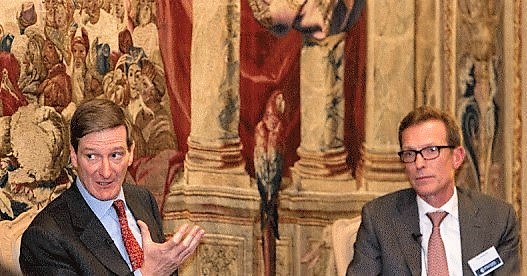
Pic of the two speakers during the debate
Dominic Grieve (left) and Yann Bonduelle (right) during the debate

Top-down French thinking is often misunderstood in Britain. The French need a philosophical 'framework' in which to work. The British like a more pragmatic approach; the French want everything well-defined within boundaries before moving ahead. The British don't even have a written Constitution, relying instead on precedents in Law. The French approach can end up with the perfect solution to a problem that has moved on in the meantime. Pros and cons emerged from both nations' approaches.

British politics is adversarial. French politics is conducted behind the scenes more. Ideas have value. The British do not like a public discussion of ideas. It is not regarded as a compliment to be considered an 'intellectual' in Britain.

Hybrid cultural approach
A hybrid approach was recommended when working with cross-cultural teams. The British like executive summaries. The French like to receive lots of information to consider first. The best approach is to give the British the 3 bullet points that they want first and move onto the framework required by other nationalities. Then have the debate.

Cultural debate evening at the French Ambassador's Residence

Education systems
The roots of the different French and British approaches trace back to our respective education systems. The French approach is to examine a concept to find its flaws. If it proves valid, it will be adopted. The British attitude is more inclined to 'get on with it'. The result can be that the British don't think through the consequences in 4-5 years' time. The British approach can therefore appear amateurish to the Germans and French.

The British education system has the upper hand when it comes to positive encouragement. It leads to a greater inclination to risk-taking in later life. The French system encourages pupils to conform. This makes it easier for French schools to rank pupils; whereas in Britain there is greater encouragement to find your 'sweet spot' and bolster self-confidence. A French lycée is competitive and critical with more negative reinforcement. The British system is seen as better at encouraging team-working from a young age.

Public v. State Education
The discussion moved on to discuss the differences between public and state education in Britain, as well as the perceived advantages of a very structured curriculum. Secondary schools in Britain may leave pupils with huge areas of 'ignorance' by contrast with the French system. It was felt that the French elite were well-educated.

Education v. Experience
Silicon Valley with its encouragement of out-of-the-box thinking and risk appetite received much admiration. This lead on to a discussion on preferences for experience over education in the UK and US. The French and Germans rank education more highly than experience. 

Education is not so essential for career progress in Britain and the UK. It is possible to find a 'side entrance'. Education becomes irrelevant once you have the experience. PwC abandoned the UCAS points system in its recruitment policy, as it was a huge predictor of social class. PwC now attracts a more diverse range of job applicants who are progressing very well and beyond expectations.


4 young people - 2 men, 2 women from different cultural backgrounds


Handling disagreement
The debate moved on to discuss direct and indirect approaches to disagreements. An indirect British approach can appear hypocritical. Courteous disagreement is a skill taught in British public schools. The intention is to have reasoned disagreements without offending. The British have developed a wider vocabulary to handle such subtle nuances.

In the South East of England, there can be a reluctance to face a disagreement. Some people may even say  'yes' to avoid a disagreement. Head further north in Britain and you will know more clearly where you stand. Here, a disagreement may even appear aggressive. Mediterranean cultures expose raw emotions in disagreements.

By contrast, academic French has a set vocabulary designed to impart complex ideas quickly without verbosity. You can't cut off a German speaker in mid-sentence or you may miss the word at the end of the sentence that conveys the real meaning.

Meeting styles
The most important person comes into the room last in a meeting in France. In British meetings, the focus is to put everyone at their ease for the discussions to follow. The French approach makes it clear who holds power in the room. No discussions will start until the Head arrives. In Britain, this strategy is disapproved of and can be high risk. Time equals money for Brits and they aren't inclined to wait.

Risk appetite
Silicon Valley has a huge appetite for risk and tolerance if a strategy does not work out. It was considered that there is still some stigma in the UK, especially in the Media. The French need 'more of the frying pan' - early pressure with the security of a safety net to improve their risk appetite.

The chair asked both men which quality they would export from each culture to create Utopia. Suggestions were French 'joie de vivre and 'bonhomie' and the UK's informality and 'unbelievable aptitude to make a deal'.

In conclusion, it was noted how learning about one language and culture opens the door to many other cultures. Cultural awareness is important even without language skills. We need to build bridges between cultures and between classes.

Pic of outstretched with loads of different miniature flags floating above theme
One language opens the door to many more cultures


The French Chamber's Cross-cultural quiz evening to be held at PwC's offices on 23 February 2017.


Pic of Yann Bonduelle speaking with his hands during the debate
Yann Bonduelle is a Partner and the UK Consulting Data Analytics Leader at PwC. His 150-strong UK team includes experts in Machine Learning, Natural Language Processing (NLP) and Artificial Intelligence (AI). He has a PhD from Stanford University in Engineering Economic Systems and an Electrical Engineering degree from INSA, Rennes, France.  The Frenchman’s international career with 8 years in California and 20 years in London. It makes him an ideal speaker to discuss working practices across cultures. 

Pic of Dominic Grieve MP
Dominic Grieve is the MP for Beaconsfield and a QC. He was the Attorney General for England and Wales and Advocate General for Northern Ireland from 2010-2014. He is  bilingual in French and English. He attended the French Lycée in London's South Kensington before studying history at Oxford University and Law in London. 

Pic of French Chamber's Senior Vice-President
Peter Alfandary, Senior Vice-President of the Chamber chaired the session (see first right). Peter is Head of Reed Smith’s French Business Group and has been involved in cross-cultural relations for over 30 years. 


Karen Andrews is a freelance French to English translator, transcreator, content writer and editor. She has a strong background in global marketing.

Email Karen for further information via karenanglicityen@gmail.com in French, German or English.

Photo credit:  Cross-cultural debate evening photos were taken by Joana Saramago. Other photo credits are noted in the properties tags for each photo.


Tuesday, 6 October 2015

Biometrics 2015


pic of Biometrics 2014 entrance flag
The Biometrics 2015 Conference and free exhibition will take place from 13-15 October in London. The conference's subtitle is Secure Identity Solutions Now! This clearly conveys the topical and urgent nature of secure identity management today.

The 3-day conference will discuss issues and applications relating to:

·      ID management in the digital world
·      Law enforcement, forensics and military applications
·      Borders and travel
·      Developing economies
·      Mobility and payments

The event is organised by the scientific, medical and technical publishers Elsevier in partnership with the Biometrics Institute.

Biometrics 2014
I attended Biometrics 2014 at the QEII Centre in Westminster. Biometrics is an ideal domain for Anglicity's translation and copywriting services. It intersects my financial background, specialisation in technological innovation and keen interest in human rights' issues.

Pic of QEII Centre with flags for Biometrics 2014 outside

Secure border controls and identity authentication in the banking world are of even greater concern in 2015 than in 2014. Following Biometrics 2014, I was invited to attend Biometrics in Banking at Citibank on 24 October 2014. The European Association for Biometrics organised that event with Financial Fraud Action UK. 

Pic of entrance area to Citibank in Canary Wharf, London

Developments in biometrics were initially driven by the US military and Homeland Security. Technologies developed for national security purposes cannot simply be transferred to the banking world. Banks have to strike the right balance between security, respect for privacy and serving their customers.

Mobile and Contactless Payments
In the past year, I have become a big fan of the ease of online payments using my laptop, mobile or iPad. I am very used to Oyster card or contactless payments on the London Underground and buses.

Pic of woman using contactless payment in shop with shopkeeper


I have just read the latest revelations from whistleblower Edward Snowden on how GCHQ can track and access your mobile remotely.  At a UKTI event at London's City Hall, I was introduced to the company that produces TFL's real-time maps of commuter movements. They assured me that all data is anonymised. It is hard not to wonder what fraudsters might do in future - or can possibly do already.

Fraud
I have had two fairly recent experiences of fraud on my personal bank account. On the first occasion, I was impressed by how quickly my bank called my mobile to advise me of the attempted fraud. I had only just reached the store's exit following a purchase. A lost debit or credit card is easily replaced and any losses are covered. 

The second fraudulent transaction took place online. I spotted the problem and advised my bank. Amounts were debited from my account in the Netherlands. A series of debits hit my account. Although my losses were covered, the incident was more alarming and took more time to rectify.

Password Alternatives
I would welcome alternatives to reduce the number of passwords that I need to remember. Banks have to find an alternative or combination of alternatives that the public will accept. Just today, I overheard a conversation in which a customer did not wish to give her credit card details over the phone while travelling.

Different age groups have different expectations. All customers want convenience without any security worries.

The loss of biometric data would be even alarming than either of my two experiences above.

Pic of eye with biometric measurements

Range of Technologies
At Biometrics 2014, I was amazed at the range of technologies in use or in development. Last year I saw or heard about the following biometrics:

·      Fingerprint
·      Palm
·      Hand
·      Vein pattern
·      Face recognition
·      Voice recognition
·      Iris
·      Behavioural
·      Real-time signature recognition
·      Gesture recognition
·      2-factor
·      Multimodal

I am looking forward to an update from the experts at Biometrics 2015.

To discuss your communication requirements, email karen@anglicity.com