Showing posts with label EU Presidency. Show all posts

Thursday, 21 July 2016

Brexit Citizens and Communities

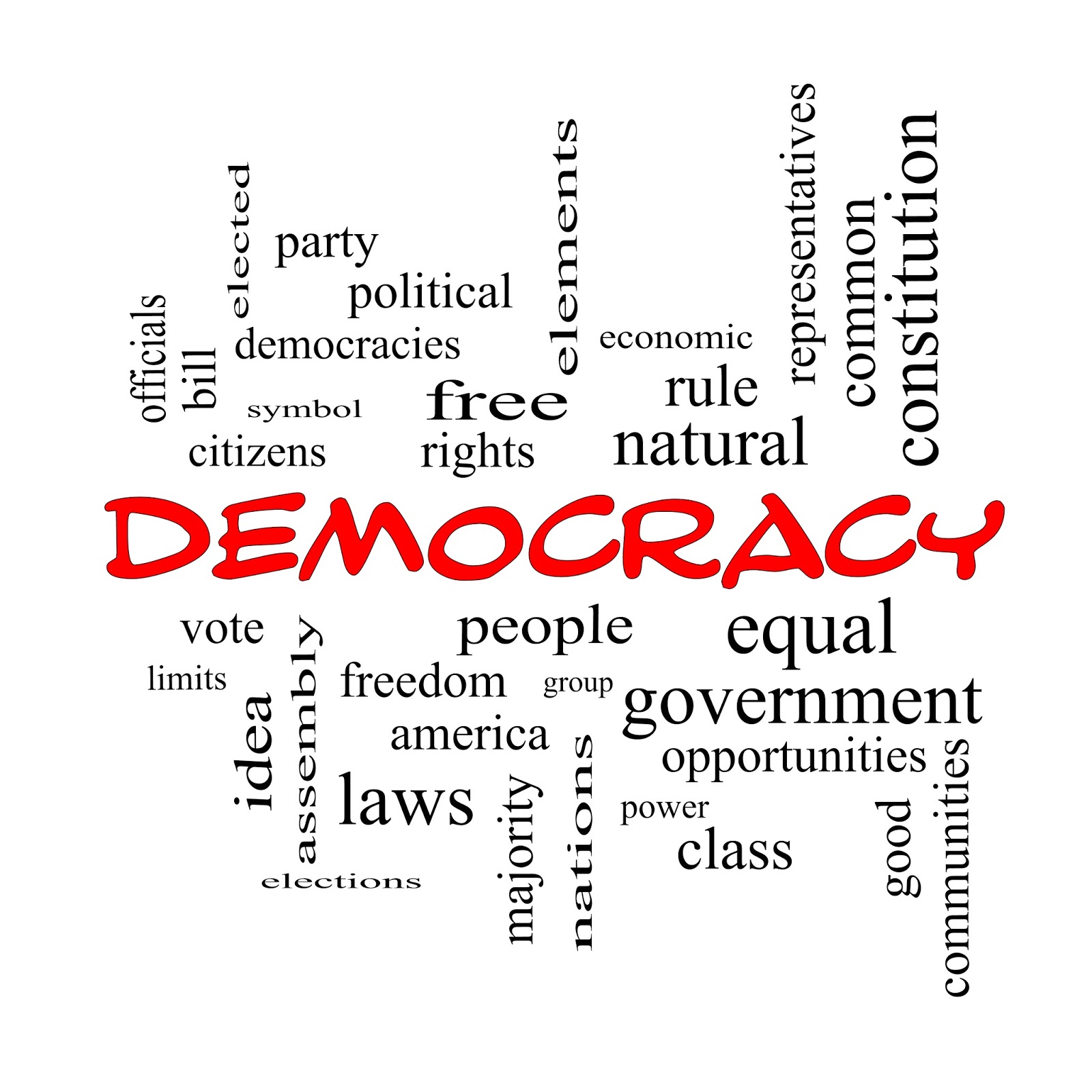
Word cloud with Democracy at centre and other related words crossword-style

Today, Theresa May and Angela Merkel met for the first time. I have followed Brexit events closely. Oddly enough, I have been working on a translation on team-building. The respective terms citoyenneté and community in French and English have stood in sharp contrast. French and English are full of false and fickle friends. The words may look similar, but they often have different positive or negative connotations, emotive appeal or different usages. They only look like equivalents. This set me thinking…

I used community in my translation. My French client queried my word choice. Communauté does not have the same resonance for him as citoyenneté. Yet, for me, the word community has a much greater emotive appeal and greater resonance in a text about working together. The emotive effect of a word in a foreign language is different for us.

I wince when I read an EU text addressing citizens. My reaction is instinctive. I wrote it off as Eurospeak until today. Now, against the Brexit backdrop, I see a fundamental breakdown in communication. I remember how odd the EU’s citizens’ dialogue sounded. The wording seems wrong to engage Brits from the front cover or the first words of a speech.

Citizenship in English is closely tied to nationality – and that now infamous Brexit word sovereignty. Sovereignty is important to the British for strong historical reasons. Citizenship is a cold, legal term; we associate it with our passports and official form-filling. It doesn’t have the same sense of belonging as community.

Pic of 3 British Passports on top of  Europe Road Atlas


Citoyen has a much stronger emotive appeal in French than citizen in English. Its usage dates back to the French Revolution with its sense that all are equal. It appears in La Marseillaise – can you get more emotive than a country’s national anthem?

Researching my subject, I found that citoyenneté appears to have much of the usage of the English community. In a highly topical usage, I found it applied to efforts to bring Muslims and Christians closer together. A similar UK local government text refers to community cohesion.

My research has left me wondering if the UK would have felt more emotionally connected, if we had been choosing to remain in the European Community rather than leave the European Union. I suppose Brexiters will merely say that I am crying over spilt milk. I’m splitting hairs over word choice. Yet, such nuances do matter. They speak to something deeply rooted within us.

EU Presidency
The UK was to take up the EU Presidency in 2017. I think it was wrong that UK voters were never told how close we were to holding the EU Presidency during the Referendum. This should have been the UK’s chance to influence the future direction of the EU. Very few Brits were aware of the UK’s forthcoming opportunity. Nor did they know that the Presidency would have meant working as a team or trio with Malta and Estonia. The EU Referendum should have followed the UK’s Presidency if Brits were still dissatisfied after this 18-month period of influence.

Theresa May today suggested that she would let the EU Presidency go. I believe that this is a mistake. Even without Brexit, the EU will have to redefine its mission and remit. All the indications suggest that the UK will remain one of Europe’s staunchest allies and a strong trading partner. Our pragmatic approach could prove useful in the tricky times ahead.

Cultural differences in communications
I can only hope that the EU PR machine reconsiders its homogenised communications as a result of Brexit. It needs to take greater account of cultural differences. I wonder how many other miscommunications like citizen and community are lurking in other translations. I can’t help thinking about Khrushchev’s “we will bury you”. What we understood and what he meant weren’t the same thing. The influence of those words was far-reaching, as Brexit is proving now. 

What will Brexit mean for democracy and union in the United Kingdom?


Ah, but Theresa May and Angela Merkel seem to agree that ‘Brexit is Brexit’. Did they mean it? What do they each understand by Brexit? Undoubtedly, not the same thing at this early stage.

What did the UK public understand by Brexit? Not how it is turning out… Will the Referendum withstand legal challenge in the courts? Where does any course of action leave democracy?


Is the subject really so dead and buried?

Friday, 18 March 2016

Dutch is FUN

Pic of Netherlands' flag in top diagonal and EU in bottom diagonal split of oblong

For sheer entertainment value it has to be 10/10. No, this is not a review of a West End Show, but a language and culture class at Europe House in London.

The Dutch readily concede that their language is not the most melliferous on the planet. If you want honey in your ear, better study Italian. Judging by Thursday’s taster class, the Dutch do not take their language too seriously. They certainly know how to make learning about language and culture FUN.

Swamp Language
First up was Gaston Dorren, author of Lingo: A language spotter’s guide to Europe. The title of his talk had worried me in advance. Dutch: the Sound of the Swamp sounded derogatory. A frog peered out from the screen at us all.

Frogland
All became clear. Gaston showed how the story of Dutch began in a swamp with detailed maps. Clever drainage and building up hillocks improved the landscape. The Dutch use Frogland as a term of endearment for their country.


Pic of Gaston Dorren with book in hand, screen shows funny illustrations
Gaston Dorren presents sign interpreters with Dutch gender challenges

Size v. Influence
Gaston joked about the size of the Netherlands. At one seventh of the size of the UK, it could fit into Scotland and get “mislaid” up there. He explained how Dutch appears in the top 1% of the world’s languages. Dutch has 24 million speakers. It is the twelfth most widely used language on the internet. It is the fifth most commonly requested language in job vacancies according to a 2013 UK survey.

History
How did the Netherlands become so influential? It became populated and prosperous at a time when Northern Germany was in economic decline. Gaston acknowledged a “shameful colonial past”. Standing in London before a largely British audience, he had no fear of anyone throwing stones on the subject. He reduced the historical wars between our two countries to wins, losses and draws as though they were international football matches. Our two nations do so love the beautiful game.

Dialects
The country’s geography helped create extraordinary linguistic diversity. There are very different dialects. A dialect on one side of this small country is unintelligible on the other side. You can still hear traces from the three original tribes. Gaston attributed their retention to the population’s lack of mobility. They didn’t travel much for 1500 years. If you need a huge pole to cross all the wet bits, well, you don’t get very far from home.

Pronunciation
Dutch has a reputation for difficult sounds. Gaston admitted that getting your pronunciation wrong could cause difficulties in the kitchen. You might get your eggs and onions muddled up. Disastrous.

The infamous “g”
It is the “unpleasant g” sound produced in the throat that is the real issue for English-speakers. Henriette Louwerse of the University of Sheffield tackled the “g” issue head on. No room for any delicacy. Dutch is loud. Seconds into the language class, she had the whole room grazing their throats to throw up the correct sound.


Pic of audience at Dutch taster class looking towards teacher on stage
Henriette Louwerse demonstrates Dutch sounds


Attitude to language
Henriette continued the humorous tone set by Gaston. She regaled us with the incredulity of her compatriots that she taught Dutch language and literature in Britain. The Dutch are proud of their country, art history, football and sports. They have never won a Nobel Prize for Literature. While they expect refugees to learn Dutch to integrate, Henriette described the attitude as “mercantile” rather than emotional.

Badges
The Dutch will insist on speaking in English to her students however. She has to equip them with humorous badges to overcome the problem: “I speak Dutch. Can I do it with you?”

Goal
Obviously, Henriette could not teach the whole room her native tongue in just 30 minutes. A better target was to be able to pronounce Dutch footballers’ and football managers’ names correctly. We all repeated the various sounds after her.

Intonation
Henriette demonstrated the rising intonation of Dutch questions. The intonation may sound exaggerated to an English ear. It is important if you want a Dutch person to understand that you are asking a question. Otherwise you risk not getting what you want.

Tactile
In the Netherlands, you do not greet someone from a distance. The words alone are not sufficient. The Dutch are a tactile nation. You must go right up to them, look them in the eye and shake them firmly by the hand as you greet them.


Pic of Henriette Louwerse teaching on stage with wide range of European flags behind here
Henriette explains how easy Dutch is

Catching Enthusiasm
Otherwise Dutch is apparently easy for English speakers. Henriette proved this to us by having us decipher two printed conversations on a leaflet. No problem. Henriette is the kind of teacher you can’t disagree with. Her enthusiasm is catching.

Dutch Embassy
This great language taster event was organised by the Dutch Embassy with Europe House’s language officers Paul Kaye and Stephen Turkington. Paul gave particular credit to Lauren Harris at the embassy.


Pic of full house at Europe House
Attentive full house at Dutch and Frisian taster classes

At the break they laid on Dutch beer and delicacies. They catered for everyone. The ground floor venue gave easy access for a knowledgeable disabled guest. Two BSL signers interpreted for two deaf visitors amid the full house. It can’t have been easy interpreting some of Gaston and Henriette’s vocabulary - never mind the speedy and humorous delivery.

Every six months, Europe House stages an event celebrating the language and culture of the current holders of the EU Presidency. Slovakia will hold its first-ever Presidency of the EU next. The Dutch have set the bar very high for the Slovak Embassy.