Showing posts with label community. Show all posts

Monday, 9 January 2017

Twelfth Night at the Geffrye


PIc of poor homeless boy at Christmas sitting on ground with chalked Christmas tree and presents


On 6th January I went along the Geffrye Museum's Farewell to Christmas. I discovered a very long queue for the Twelfth Night cake and warm mulled wine on my arrival. The evening also involved carol singing with the traditional burning of the holly decorations at the end (as above).


Founder's statue in alcove high in the building under the clock
The Geffrye is London's Museum of the Home in Hoxton, East London. The buildings were originally almhouses (houses for the poor) built by the Company of Ironmongers in 1714 following a bequest by Sir Robert Geffrye, their former Master. Robert Geffrye was a Cornish merchant who moved to London. During his illustrious career,  he became Sheriff of London, Lord Mayor of London and was knighted. 

Sir Geffrye's statue looked down on us as we sang carols. In fact his costumed 'stand-in' complete with wig lead the evening's proceedings with good humour in the rainy conditions. The Twelfth Night revellers' carol sheets got a little soggy as they sang. All were still of good cheer singing out the last night of the Christmas period.

You can see my brief record of the night including the holly burning on the YouTube video below.


Geffrye's Christmas Past Exhibition
During my visit, I also took an opportunity to see the period rooms inside the museum. The Christmas Past Exhibition showed the rooms decorated according 400 years of seasonal English traditions. 

Christmas has always been a time to gather with friends and family, eat and be merry. 


Music played an important role in the home as well as in church.


Sparse Decorations
It was noticeable that decorations gradually became more lavish over the centuries. One notable exception was during time of the Puritans. They barely had any decorations at all.

Back to the Future?
One room particularly hit me as it looked like a combination of my grandparents' homes. It was like stepping back in time. The positioning of the Christmas tree in the window and the doll in the chair felt uncanny. I recognised the decorations as sandcastle flags.


The era didn't quite fit with the Geffrye's blurb. However, I suppose that people did not change their furnishings and furniture as often as we do today. It was very much a matter of 'make do and mend' for my grandmothers' generation.


I got further shocks as I walked on. I felt that I had stepped into my own childhood Christmases. I was not the only one, as I overheard others reminiscing about their past Christmases. One room looked like that of a friend's house whose parents were older than mine.


My parents had more  a more modern style of furniture, if not quite as below.


I was stunned to recognise the style of paper decorations on the ceiling.


Even the wrapping paper all over the floor looked familiar, although the presents were from an earlier time.


Teenage Bedrooms Exhibition
Still reeling from my 'Back to the Future' experience, I moved on to the Geffrye's Teenage Bedrooms exhibition. It came as even more of a shock to find that my own children's experiences (who are still teenagers) are already history. The past medals and keepsakes... the line of Harry Potter books... those irritating cards and plastic figures they used to collect because their friends did ... They're history!


Pic of medals won in childhood in Teenage Bedroom display


Pic of Harry Potter books, collection cards and other keepsakes with comments from a teenager's bedroom


There was only one actual teenage bedroom set up. The others were formed from photographs of actual teenager's rooms, along with various comments. I loved the noticeboard with visitor comments about their own rooms or those of sons, and daughters'. Many comments struck a chord with me.


The Geffyre museum demonstrates the gradual increase in wealth across class boundaries that my generation and my parents' generation saw in our lifetimes. Today's teenagers are expected to struggle more financially especially after Brexit. They are already running up student debts and may never own their own homes. They are unlikely to inherit much either, as their parents may be forced to sell their homes to finance care in old age. 

Debt-laden from student days, homes ever dependent on landlords, responsible for both children and ageing parents, precarious employment with limited chances to save for their own future and pensions... it's a gloomy prospect for today's teenagers post-Brexit. I studied and worked hard for a better future for my children than I, my parents or my grandparents knew.

Nobody seems to have the answer on how the Economy will work if technology takes away jobs. Punitive measures won't work if there aren't jobs for all sections of the community. How will pensions work? 

We already have foodbanks, a shortage of affordable homes and the homeless sleeping rough in the streets in mid-winter. Standing in a former almshouse, I wondered if the haves will help the have-nots again? 

I thought of my maternal grandmother. Her only hope of becoming wealthy was to win the pools or the lottery. She dreamed of owning a cottage with roses growing over the door. She won the pools once. The family story goes that she was incredibly excited. Only everyone in the country seemed to win too that weekend. All she could afford was a new rug to go in front of the fire.

My visit to the Geffrye felt like a farewell to more than Christmas 2016/17.


Definitions and further information

almshouse  in British History
British history a privately supported house offering accommodation to the aged or needy
mainly British another name for poorhouse

haves and have-nots   
Collins dictionary: the people who are very wealthy and the people who are very poor
The stark contrast between the haves and have-nots has always existed but in a recession the injustices become more painful.

Company of Ironmongers

Sir Robert Geffrye

The Geffyre, Museum of the Home


Monday, 26 December 2016

London Calling 'Merry Christmas'


Joyeux Noël   Merry Christmas   

Frohe Weihnachten   Buon Natale

Feliz Navidad   Vrolijk Kerstfeest


Καλά Χριστούγεννα   God Jul

Merry Christmas from London. Above is the famous Norwegian Christmas tree in Trafalgar Square. It looks fabulous reflected in the square's fountains. The tree is an annual gift as noted on the sign at its base:


This tree is given by the City of Oslo as a token 
of Norwegian gratitude to the
 people of London for their assistance during the 
years 1940 -1945.
A tree has been given annually since 1947.

The square has also been a site for carol singing and contains a nativity scene. The figures were carved by the Japanese-born artist Tomoaki Suzuki. He chose the figures to represent Britain's rich multicultural community today. The donkey and sheep were modelled on real animals at Hackney City Farm. The crib was first used in 2006.

Nativity scene inside glass case, angel on high over baby Jesus in the straw


The Norwegian tree remains London's most famous Christmas tree. Its arrival signals that Christmas is coming.


Thursday, 21 July 2016

Brexit Citizens and Communities

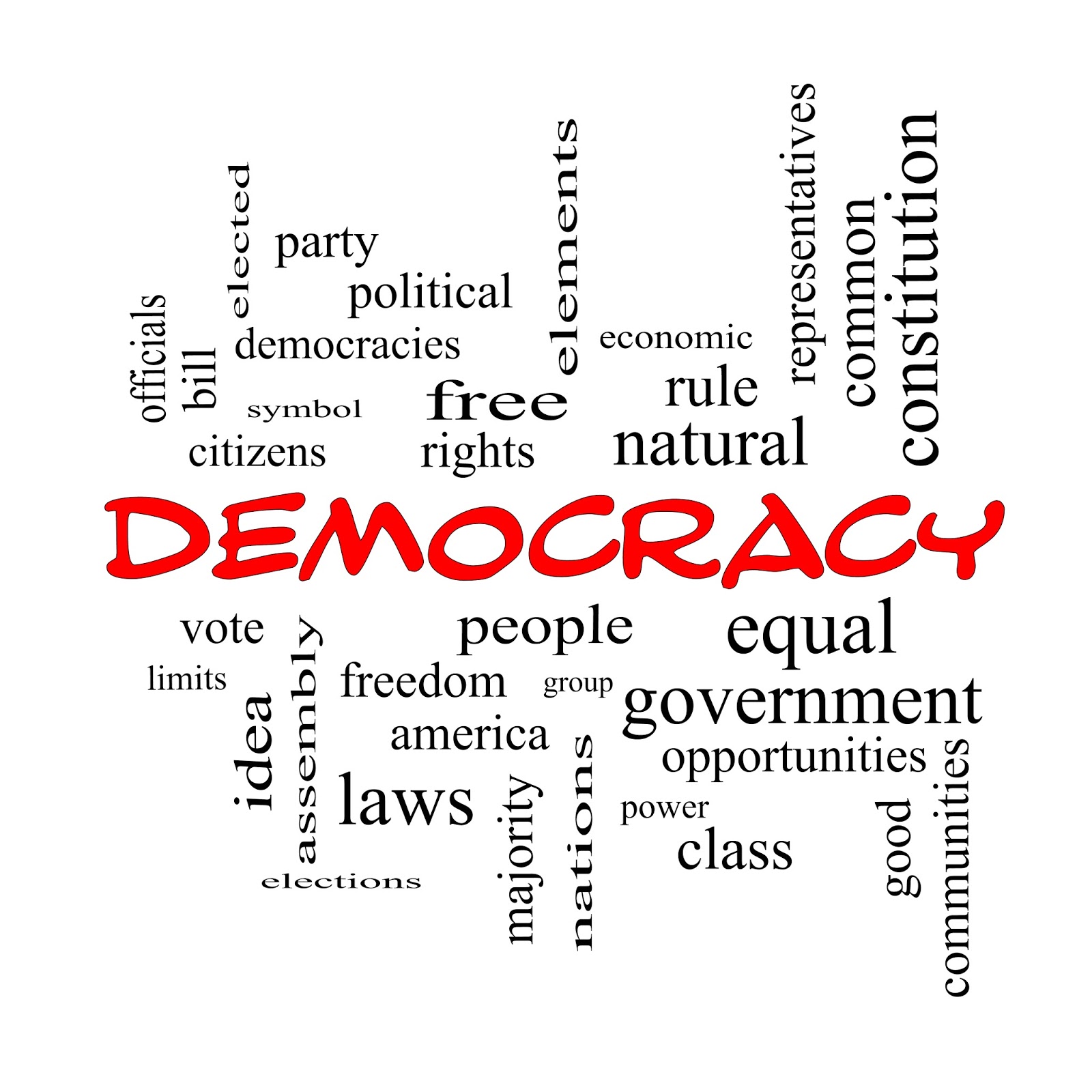
Word cloud with Democracy at centre and other related words crossword-style

Today, Theresa May and Angela Merkel met for the first time. I have followed Brexit events closely. Oddly enough, I have been working on a translation on team-building. The respective terms citoyenneté and community in French and English have stood in sharp contrast. French and English are full of false and fickle friends. The words may look similar, but they often have different positive or negative connotations, emotive appeal or different usages. They only look like equivalents. This set me thinking…

I used community in my translation. My French client queried my word choice. Communauté does not have the same resonance for him as citoyenneté. Yet, for me, the word community has a much greater emotive appeal and greater resonance in a text about working together. The emotive effect of a word in a foreign language is different for us.

I wince when I read an EU text addressing citizens. My reaction is instinctive. I wrote it off as Eurospeak until today. Now, against the Brexit backdrop, I see a fundamental breakdown in communication. I remember how odd the EU’s citizens’ dialogue sounded. The wording seems wrong to engage Brits from the front cover or the first words of a speech.

Citizenship in English is closely tied to nationality – and that now infamous Brexit word sovereignty. Sovereignty is important to the British for strong historical reasons. Citizenship is a cold, legal term; we associate it with our passports and official form-filling. It doesn’t have the same sense of belonging as community.

Pic of 3 British Passports on top of  Europe Road Atlas


Citoyen has a much stronger emotive appeal in French than citizen in English. Its usage dates back to the French Revolution with its sense that all are equal. It appears in La Marseillaise – can you get more emotive than a country’s national anthem?

Researching my subject, I found that citoyenneté appears to have much of the usage of the English community. In a highly topical usage, I found it applied to efforts to bring Muslims and Christians closer together. A similar UK local government text refers to community cohesion.

My research has left me wondering if the UK would have felt more emotionally connected, if we had been choosing to remain in the European Community rather than leave the European Union. I suppose Brexiters will merely say that I am crying over spilt milk. I’m splitting hairs over word choice. Yet, such nuances do matter. They speak to something deeply rooted within us.

EU Presidency
The UK was to take up the EU Presidency in 2017. I think it was wrong that UK voters were never told how close we were to holding the EU Presidency during the Referendum. This should have been the UK’s chance to influence the future direction of the EU. Very few Brits were aware of the UK’s forthcoming opportunity. Nor did they know that the Presidency would have meant working as a team or trio with Malta and Estonia. The EU Referendum should have followed the UK’s Presidency if Brits were still dissatisfied after this 18-month period of influence.

Theresa May today suggested that she would let the EU Presidency go. I believe that this is a mistake. Even without Brexit, the EU will have to redefine its mission and remit. All the indications suggest that the UK will remain one of Europe’s staunchest allies and a strong trading partner. Our pragmatic approach could prove useful in the tricky times ahead.

Cultural differences in communications
I can only hope that the EU PR machine reconsiders its homogenised communications as a result of Brexit. It needs to take greater account of cultural differences. I wonder how many other miscommunications like citizen and community are lurking in other translations. I can’t help thinking about Khrushchev’s “we will bury you. What we understood and what he meant weren’t the same thing. The influence of those words was far-reaching, as Brexit is proving now. 

What will Brexit mean for democracy and union in the United Kingdom?


Ah, but Theresa May and Angela Merkel seem to agree that ‘Brexit is Brexit’. Did they mean it? What do they each understand by Brexit? Undoubtedly, not the same thing at this early stage.

What did the UK public understand by Brexit? Not how it is turning out… Will the Referendum withstand legal challenge in the courts? Where does any course of action leave democracy?


Is the subject really so dead and buried?

Friday, 15 July 2016

Liberté, Egalité, Fraternité

Close-up of names on Wedmore War Memorial with St Mary's Church in background


I have been enjoying a period of calm away from London and back in the area of Somerset in which I grew up. Looking at the familiar Mendip Hills and the tranquil Somerset Levels, it is even harder to fathom the madness in the world. 


Then comes news of another tragedy in Nice, France.


ITV tweet re Nice attack

The tranquillity of Thiepval Woods in France was torn apart by the Battle of the Somme one hundred years ago. The First World War touched every community – the local village war memorials bear testament to that. 

In the local churchyard there is also the grave of a man who died afterwards of his injuries in Winchester Military Hospital. The horrors of war continued long after hostilities stopped. They lived on in the memories of survivors and the bereaved.

There is a shiny plaque inside St Mary’s Church, Wedmore. It looks new. It seems more likely that it has been polished for the recent World War One commemorations.

I was shaken when I read the words on that plaque. It commemorated the loss of a couple’s only son. He was shot through the heart while leading an attack. He is buried in Ploegsteert Wood in Belgium near the French border. He was exposed by being a little too far ahead of the rest.


Close-up of plaque with details of death of Stanley Benskin Henson in Wedmore's St Mary's Church


Stanley Benskin Henson, Second Lieutenant in the 1st Somerset Light Infantry, lived over a hundred years ago. He died on my birthday. When I looked him up online, I discovered another coincidence: he was born on my elder son’s birthday. It really hit home what peace in Europe means at that moment.

Nice
Today, I have been shaken again by the tragic news from Nice. I can’t help thinking about how my sons and I walked, without a care in the world, along Nice’s Promenade des Anglais in 2015. My heart, thoughts and prayers go out to the families of the bereaved, the injured and all those affected.

On such days, we share a common humanity and solidarity. It is a pity that it always seems to take a tragedy to bring us all together. In another coincidence, the murdered British MP, Jo Cox, is buried today. I recall her words:

“We are far more united and have more in common
with each other than things that divide us”

On such days, we come to appreciate the freedoms that were won in two world wars. It is so easy to be complacent. Terrorists will not win. It is hard to see how security forces can anticipate the crazed activities of every isolated extremist.

Increased intrusion into our lives, tightened security and extended states of emergency won’t deal with the issue. Instead they may rob honest, law-abiding citizens of their hard-won freedoms.

Not all social change can be imposed by legislation from the top down. It has to come from the bottom up - from all around us - from all of us.

We take our freedom for granted and do not notice its gradual erosion. We too easily believe that the behaviour of an isolated, extremist minority reflects the beliefs of a whole ethnic community.

We tend to believe that our vote and voice do not count or make a difference. Today, many are sending out prayers and messages to Nice on Twitter. It’s hard to know what to say. We are not all blessed with the gift of the gab. We feel powerless. Our words feel inadequate.

Every tweet and message sent into the apparent ether adds up. It is important that the voice and conscience of the honest, caring, law-abiding silent majority drown out the atrocities of terrorists and extremists.

Unfortunately, we know again today that there is much work to be done in healing the world’s communities.

I think of France’s inspirational Liberté, Egalité, Fraternité.

Liberté: We have freedom, but it is under threat and still not shared by the whole world.

Egalité: Could do much better. It’s not all about legislation. It’s about mindset.

Fraternité: This is the responsibility of every citizen not just politicians. Why does it always take a tragedy to draw us closer together? It only takes a smile and a kind word - regularly and on ordinary days. Others may appear different, but they hurt and bleed just like us.

My prayers are with Nice on this dark day.

Pic of promenade looking towards Nice lighthouse at dusk, sea to right