Showing posts with label botany. Show all posts

Wednesday, 5 December 2018

The New Karen Communications Consultancy Blog

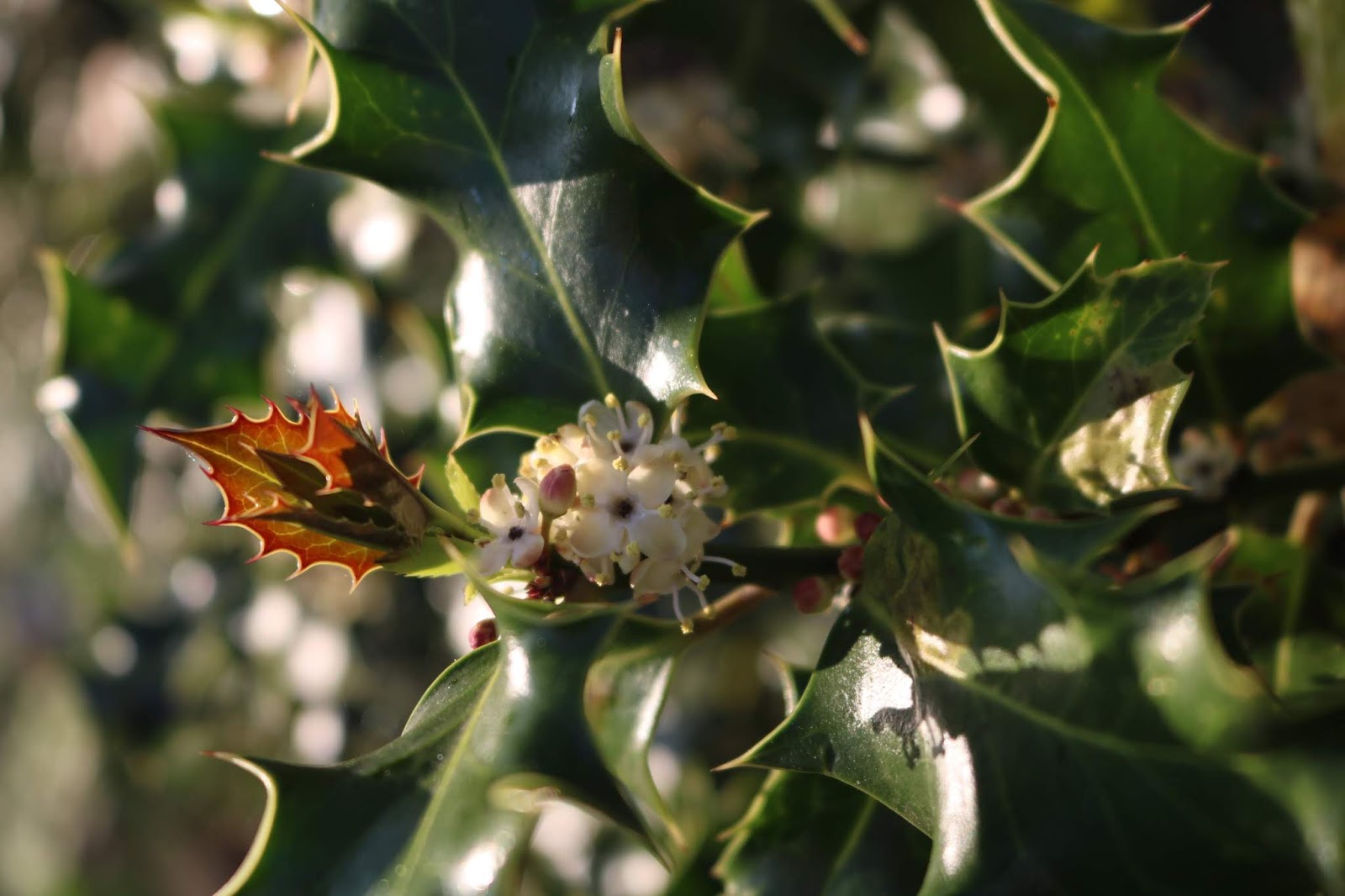
Pic of sunlight on holly flowers and prickly leaves


Karen Communications Consultancy Blog

Have you seen the blogs on my new website? The new series is beginning with Christmas blogs on a botanical theme, having recently completed my MSc in Plant Diversity. The plants have been deliberately chosen to show the diversity of the world's plants rather than merely repeat the standard range of Advent plant choices.

As well as showcasing the beauty of plants, my content strategy also highlights some of the serious topics on plants this Christmas. For example, climate change and plant blindness are very much to the fore this December.

Link to the blog with details of some of the individual content below:
https://karencommunicationsconsultancy.wordpress.com 

2018 Botanical Advent Blogs

Links to the first five posts on my new blog and venture for Karen Communications Consultancy are below:

Holly for all Seasons

Common or European Holly, Ilex aquifolium

Holly often only gets noticed at Christmas.
Gardeners and missing berries.
Holly works hard all year supporting local biodiversity.

Rehabilitating a Rotten Fruit

Common Medlar, Mespilus germanica

A unique fruit that is eaten 'rotten'.
Winter fruit valued in past, now out of fashion.
Does it have local potential due to climate change?
Shakespearean tale of mistaken identity, origin and unexpected new sibling.


Mahonia for Winter Sunshine

Oregon Grape, Mahonia aquifolium and other Mahonia species

Botanical classification, winter colour and fruits.
Value as a medicinal plant in both Chinese and Western medicine.
A Christmas Aspen Tale

(European) Aspen, Populus tremula

British folklore and botanical details on the quivering Aspen.
Native species as opposed to the North American Aspen, Populus tremuloides.
Fragrant Winter Daphne 

Daphne genus with a particular focus on Daphne bholua.
Valued for its fragrance and beautiful winter colour range.
Protected medicinal and poisonous plant.
Discussion of climate response, plant blindness, labelling, etc.


The new website is still in development. Feedback is welcome on what works and what needs improvement. What features do you like? What information or services would you like to see?

In the meantime, enjoy the approach to the Festive Season.

Best wishes for the end of 2018 and a great 2019.
Karen


NB:
Clarifying my Surname
I prefer to just be called Karen by everyone. I tend to write in my maiden name of Andrews. Netto remains my legal name. My apologies if this causes digital confusion. I am one and the same person. I've put both surnames together for the time being on the new blog.

There's an Australian MP who shares my first name and maiden name and it's hard to compete digitally with her. Netto seems to send everyone to the wrong country and language combination. It's a Portuguese or Brazilian Portuguese name in origin, but most French speakers think it makes me Italian. I am 100% British with a lot of Welsh and English ancestry, some Scottish ancestry and one great-grandmother who was born in Jersey.

I'm pleased to be one of that rare British species who loves other countries' languages. I speak, write and translate French. I also have varying fluency levels and understanding of German, Italian and Spanish.


Sunday, 7 October 2018

A Day of Discoveries at the Linnean Society


Looking up at the ceiling skylights and columns of the Linnean Society's library


Old manuscripts, books and letters can open a window on the past even in the digital age. While there is no guarantee that last year’s ebooks and apps will open after the next software update, the pages of a centuries-old book will still turn tomorrow. Much of the past is available digitised online today. Can it beat the thrill of seeing the original manuscripts for yourself? Let me tell you about a very special library and its treasures tucked away in London’s Piccadilly for Libraries Week (8-13 October 2018).


It was a thrill to discover the treasured books and manuscripts of Carl Linnaeus or Carl von Linné last week. Dr Isabelle Charmantier, Head of Collections, gave a talk on the famous Swedish botanist and his classification system at the Linnean Society of London. I followed the talk with one of the society’s regular treasure tours.


Linnaeus was a fellow bibliophile. It must have been purgatory not having access to his professor's library. He even drew a map of his professor's home showing the long corridor from his room to the library in the opposite wing. His late night reading and note-taking caused consternation. The professor's wife worried about the house being burnt down if he fell asleep by candlelight. The professor investigated. Linnaeus gained access to the library.

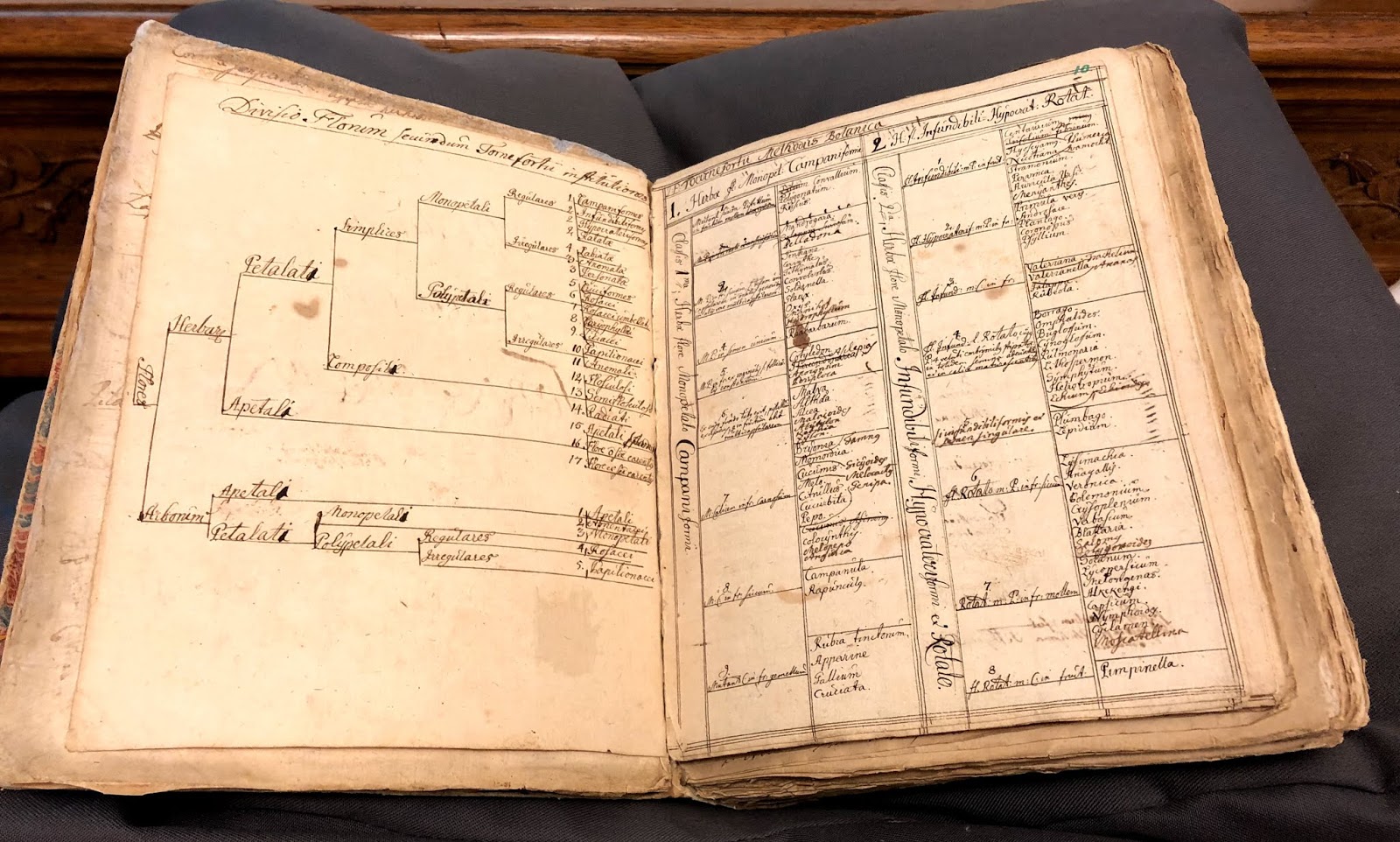
I marvelled at Linnaeus' ability to classify so much information in a pre-computer age. I admired his neat handwriting - a lost skill for many today. His precocious taxonomic talent and intentions were obvious in his twenties.

Facsimile of neatly handwritten classification records 

The manuscripts on display at the seminar were facsimiles. The real treasures are held in a special vault in the basement. It houses Carl Linnaeus' botanical and entomological collections, along with his own library's books, papers and letters.

Inside of the vault at the Linnean Society of London on the treasures tour


How did the Swedish botanist's collections end up in London? 
When Linnaeus died his wife offered his collections for sale as urged by the botanist to cover dowries for their daughters. Joseph Banks of the Royal Academy and Kew expressed interest. Linnaeus' son protested and took good care of the collection until his own death. 

Portrait of James Edward Smith in the library
Joseph Banks was no longer interested. He urged the botanist James Edward Smith to acquire the collection instead. There followed a series of letters between James Edward Smith and his wealthy wool merchant father. He gradually wore his father down and the Linnean Society of London was founded.


Our guide turns the page of one of two original manuscripts

Our tour guide for the day was the Linnean Society's retired librarian. She shared her fascination with her former charges. The Linnean Society is very grateful to 
the Mellon Foundation for its donations to help digitise and conserve the precious collections. 

Saturday, 16 December 2017

2017 Top 10 Blog Posts

Pic of Top 10 in red with centre of 10 hit by blue-feathered arrow


As the end of 2017 is fast approaching, let’s recap on the year’s most popular blogs as we did in 2015 and 2016. 

2017 has proved a quieter year for blogging - especially when compared with my exceptionally busy year of 2016. The year's writing still resulted in some very popular blogs with readers judging by my analytics. Event blogs remained popular. They were beaten by a number of other blog subjects this year. The early year blogs were the most popular. The cultural blogs of 2016 seemed somewhat dampened by Brexit.

I have remarked on a number of occasions that clients are not interested in translation. I therefore try to engage them via cultural aspects or by illustrating important considerations using another subject - e.g. boat industry safety, ice skating, art, etc. As a number of these blogs appear in the top 10 below, I consider that this strategy is working. Blogs raise a freelancer's profile and go on working for you when you are busy. Old blogs are revisited frequently. That was certainly the case for this year's No. 1.


Top Blogs

1. French v. British Cultural Debate
Summary of a French Chamber of Great Britain debate that took place at the French Ambassador's Residence in London. It centred on the differences between French and British business approaches and education. 

Every time Brexit discussions became tricky, the visits to this blog seemed to increase. Analytics reveal around 3,500 views - not bad for a freelancer's blog.
Post from 25 January 2017

Summary of the FIT President's Presentation at the University of Bristol in the presence of the Chair of GALA and a former Chair of the ITI. There was much discussion on the night and following the event - especially about hype affecting the translation industry.
Post from 16 February 2017

Review of Guardian Masterclass on Video production and editing by Rosenblum TV - and my experiences of putting what I learnt into practice afterwards.
Post from 10 January 2017


This could be considered number 2 if I combined all the viewings for the French and German versions too. An example of trying to explain translation issues to clients using safety and quality considerations from another field.
Post from 13 January 2017


5. Virtual Reality as an Art Form
This high entry surprised me. Art is a field that interests French clients. However, the subject is relevant to considerations on artistry and innovative tools in the translation industry. The possibilities are only just beginning. Real excitement tinged with concerns as with any new field.
Post from 12 January 2017


6. Is Speech Technology Unstoppable?
A blog inspired by a webinar on speech technology by TAUS. This is probably the most controversial subject matter and approach of the year. However, given how the year has developed with President Trump and North Korea, etc, the concerns seem even more relevant. The technologists have been dictating the direction of the translation industry for some time, it is time for the human-centred counterrevolution.
Post from 17 January 2017

7. Australian Impressionists - Glocalisation in Art?
Review of the National Gallery's Australian Impressionists' Exhibition. It was interesting how the Australian artists were inspired by French Impressionists to depict their own country. Is native expression better in art as in translation?
Post from 20 January 2017


8. Inspirational Legacies of Words
Summary of talk linked to South African exhibition at the British Museum. Consideration of the legacy of words left by Presidents Mandela and Obama. Some great quotations and an emphasis on the importance of education.
Post from  18 January 2017


9. Canary Wharf Winter Lights Festival
Review with video of the light festival in Canary Wharf, London.
Post from 25 January 2017


10. Choosing an Inspirational Statue
Comments on leadership inspired by the selection of models for the next Fourth Plinth Statue in Trafalgar Square.
Post from 26 January 2017


A reminder of last years' top blogs:

Top Business and Cultural Blogs in 2016


Plant Diversity in 2016-17?
What can you expect in 2017? The MSc in Plant Diversity at the University of Reading is keeping me very busy, but you can probably expect more on botanical, ecological and climate change subject matter. There's a rich seam of material and comparisons yet to be explored.

In the meantime, have you seen my Advent Blogs on Dr Alastair Culham's site at the University of Reading?
The Glastonbury Thorn
Christmas Cyclamen 

Have you seen the botanically-inspired blog about professional translation?


Cow Parsley or Hemlock


Season's Greetings and Best Wishes for 2018
Karen


Karen Andrews is a French to English marketer and marketing strategist, translator, transcreator, content writer and editor. She holds an MSc in Scientific, Technical and Medical Translation with Translation Technology from Imperial College London (2005-7). She is a Member of the Chartered Institute of Linguists, Society for Editors and Proofreaders, Society of Authors and the Institute of Scientific and Technical Communicators. She can also offer your brand the value of over 15 years' expertise and experience in global marketingKaren Andrews is  studying for an MSc in Plant Diversity at the University of Reading (2017-18).


Monday, 4 December 2017

Bitten by the Reading Botany Bug

The Protea represents change and hope


My regular blog followers have probably noticed that my blog has been somewhat quieter in 2017.  There's a simple explanation. I enrolled on the MSc in Plant Diversity at the University of Reading in September.

I appreciate having access to the expertise of two highly experienced botanists on the course. It is patently apparent that Dr Alastair Culham and Dr Jonathan Mitchley enjoy teaching students. Teaching does not come across as an inconvenient distraction from research work for them.They make learning about plants fun. We laugh a lot as we learn - if you don't believe me check out our #MScPlDiv Twitter hashtag.

Despite all the laughter, serious learning takes place. The field trips are undoubtedly my favourite part of the course. As a kinesthetic and visual learner, being out is the field with an expert botanical guide is great. I have discovered a whole new world with my hand lens and a microscope. As keen gardener and garden visitor, I thought I knew plants quite well beforehand. Oh my! I can't believe how much I missed that was right under my nose.

When you are learning new subjects, there are inevitably times when the going gets tough. Our botanical lecturers seem to know as much about learning psychology as they do about plants. Activities are also supported by back-up staff - including past students. I have also benefitted from the knowledge of fellow students. Our group is a mixture of nationalities, ages and backgrounds.

I'm still translating and providing transcreation services. Look out for further blogs on botanical subjects. I plan to increase my writing output in the future. In the meantime, you can read my guest blog in Alastair Culham's 2017 Advent blog series. Keep following his Advent blog for contributions from a host of expert and knowledgeable botanists in the run-up to Christmas. Alastair opened the new season with a blog on the Christmas Cherry.

Link to my Guest Blog on the Glastonbury Thorn: http://blogs.reading.ac.uk/crg/glastonbury-thorn/


Karen Andrews is a French to English marketer and marketing strategist, translator, transcreator, content writer and editor. She holds an MSc in Scientific, Technical and Medical Translation with Translation Technology from Imperial College London (2005-7). She is a Member of the Chartered Institute of Linguists, Society for Editors and Proofreaders, Society of Authors and the Institute of Scientific and Technical Communicators. She can also offer your brand the value of over 15 years' expertise and experience in global marketing

Karen Andrews is  studying for an MSc in Plant Diversity at the University of Reading (2017-18).